University of Glasgow Bell Tower
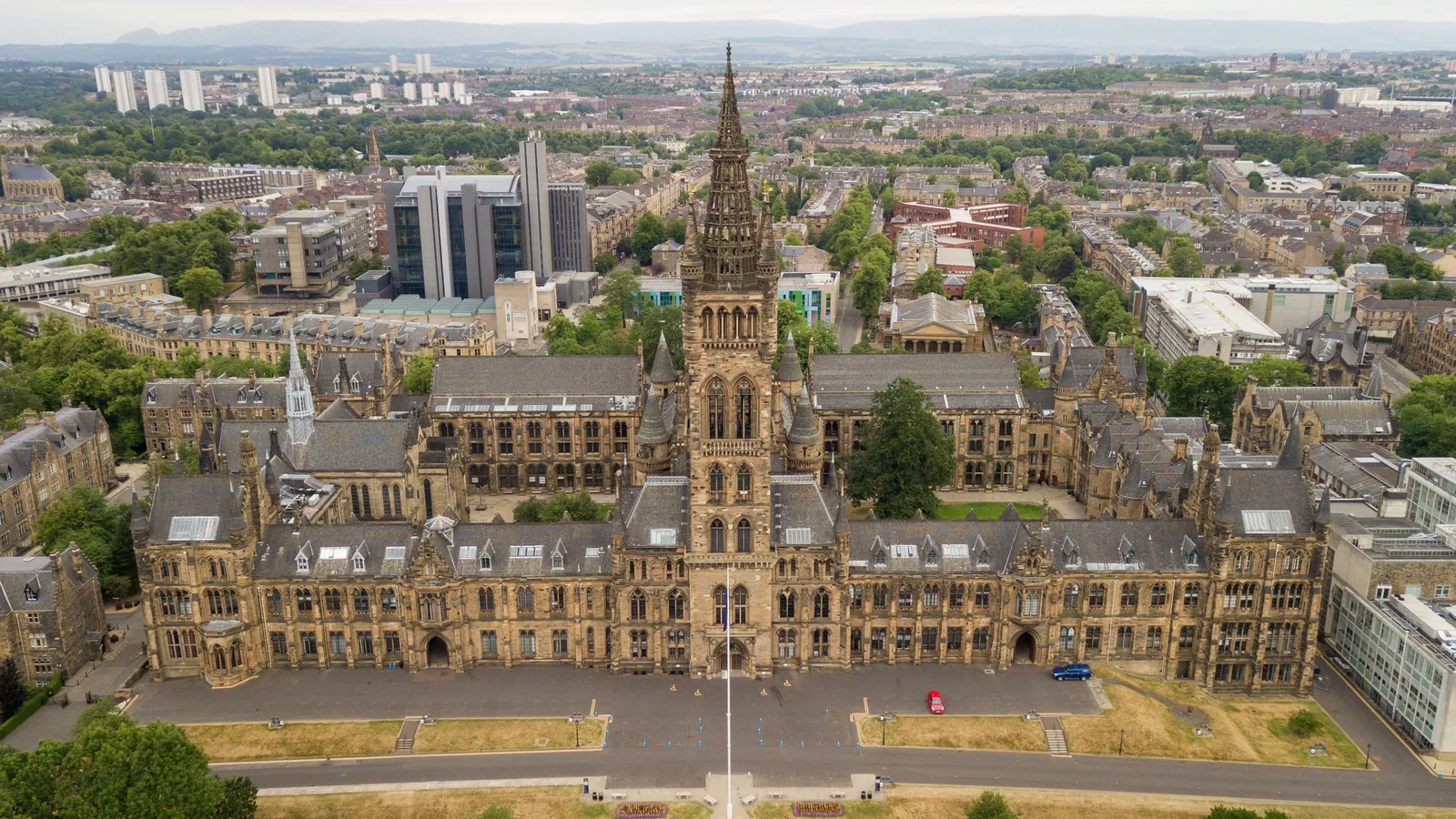
The bell tower and open spire of the University of Glasgow's main building are the West End's most recognisable skyline feature, visible across Kelvingrove Park. Added by John Oldrid Scott between 1887 and 1891 to his father's Gothic Revival design, the tower is best appreciated on a walk around the campus or a student-led historical tour.
Photos
Leo Chan
A Gothic Revival landmark
The university moved to Gilmorehill in the 1870s, into a vast building designed by Sir George Gilbert Scott. He died before it was finished, and his son John Oldrid Scott completed it in 1891, adding the central tower and its distinctive open spire between 1887 and 1891. The stonework mixes local stone with Kenmure freestone dressings. The spire is visible from much of the West End and makes a handy landmark when finding your way.
Seeing it up close
The tower rises above the Gilbert Scott Building, which is still used for teaching, events and graduations. The easiest way to see more is a historical tour run by the Students' Representative Council: about an hour long, led by student guides and bookable online, covering the architecture and centuries of university history. The University Chapel is right next door.
Make a West End day of it
The tower looks down over Kelvingrove Park, and Kelvingrove Art Gallery and Museum is a short walk downhill. Kelvin Hall sits opposite the museum, and Òran Mór, the converted church at the top of Byres Road, is about ten minutes away for lunch or a drink. The Kibble Palace glasshouse in the Botanic Gardens is a little further on.
Highlights
- Open Gothic spire by John Oldrid Scott, 1887–1891
- Tops the Gilbert Scott Building on Gilmorehill
- Student-led historical tours of the campus
- Overlooks Kelvingrove Park
Good to know
- Historical campus tours are run by the Students' Representative Council and booked online.
- The building is a working university, so some areas may be closed during exams and events.
Frequently asked questions
Nearby
Sources: gla.ac.uk · victorianweb.org