Clava Cairns
Clava Cairns, or Balnuaran of Clava, is a Bronze Age cemetery east of Inverness built around 4,000 years ago. Three cairns ringed by standing stones sit in a line among trees, with passage entrances aligned to the midwinter sunset. Managed by Historic Environment Scotland, it is open all year.
Photos
Laura G
What you will see
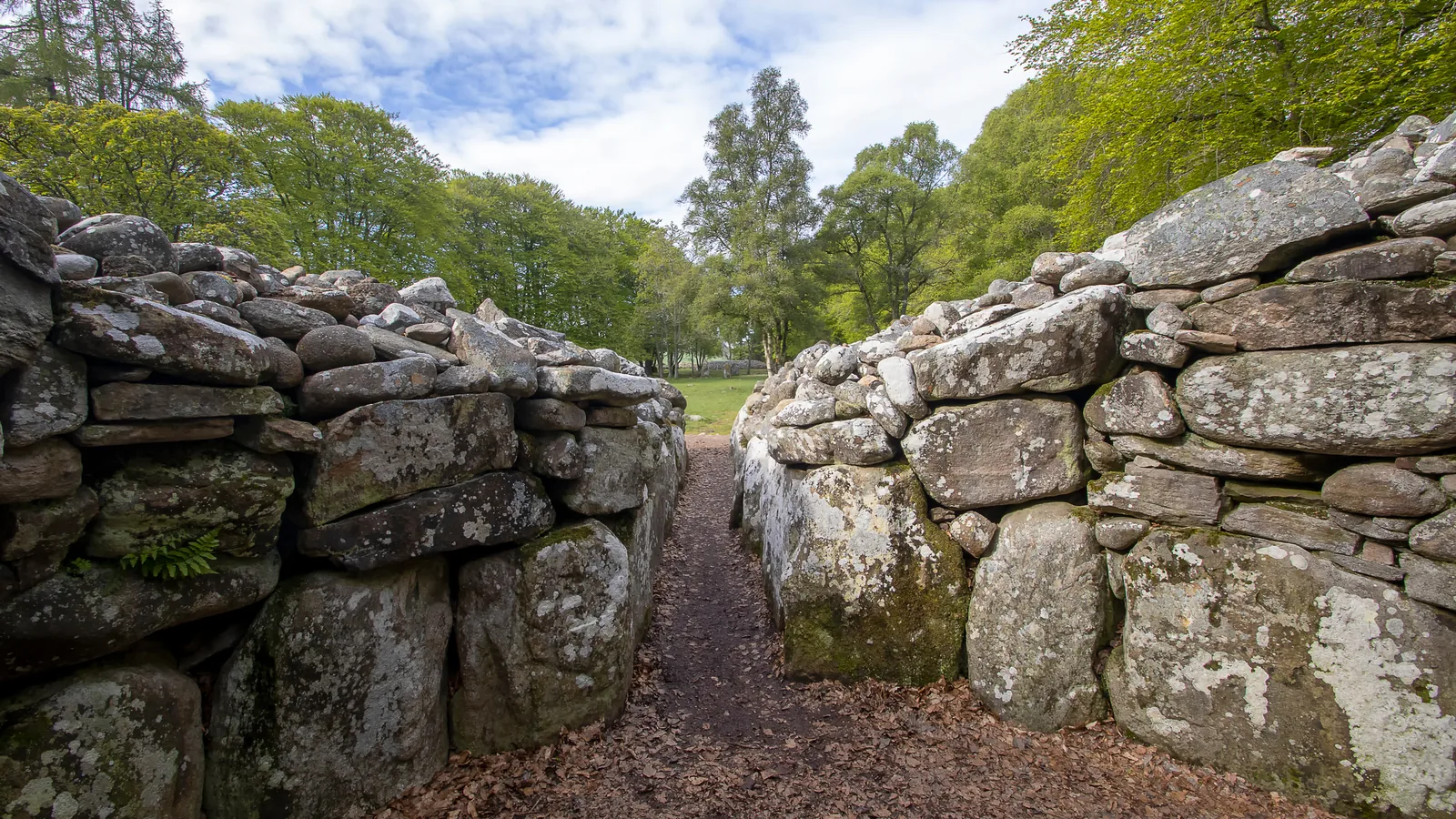
The three main cairns run in a line from north-east to south-west. The two at either end are passage graves, while the central one is a ring cairn, the only one with stone causeways leading out to its standing stones. Each is circled by standing stones, tallest at the south-west. The setting among trees keeps it quiet and atmospheric even when other visitors are about.
Details to look for
The passage entrances face south-west towards the midwinter sunset, so a late-afternoon winter visit is especially atmospheric. Look for cup-and-ring marks carved into some stones, and kerb stones graded by size and colour. There are also remains of a medieval chapel, and Milton of Clava is a second part of the site you can visit. Wear shoes that can cope with grass and uneven ground.
Why it matters
Balnuaran is the type site for around 50 similar cairns around Inverness and the Moray Firth, which is why archaeologists refer to them as Clava cairns. It is a short drive from Inverness and easy to combine with other sites east of the city. Spend time walking round each cairn rather than rushing; the arrangement of stones makes more sense from different angles.
Highlights
- Around 4,000 years old
- Two passage graves and a central ring cairn
- Entrances aligned to the midwinter sunset
- Cup-and-ring marked stones
- Open all year
Good to know
- Open all year round.
- Cared for by Historic Environment Scotland.
- Milton of Clava, a second part of the complex, is also open to visitors.
Frequently asked questions
Nearby
Sources: historicenvironment.scot · en.wikipedia.org