Marble Arch
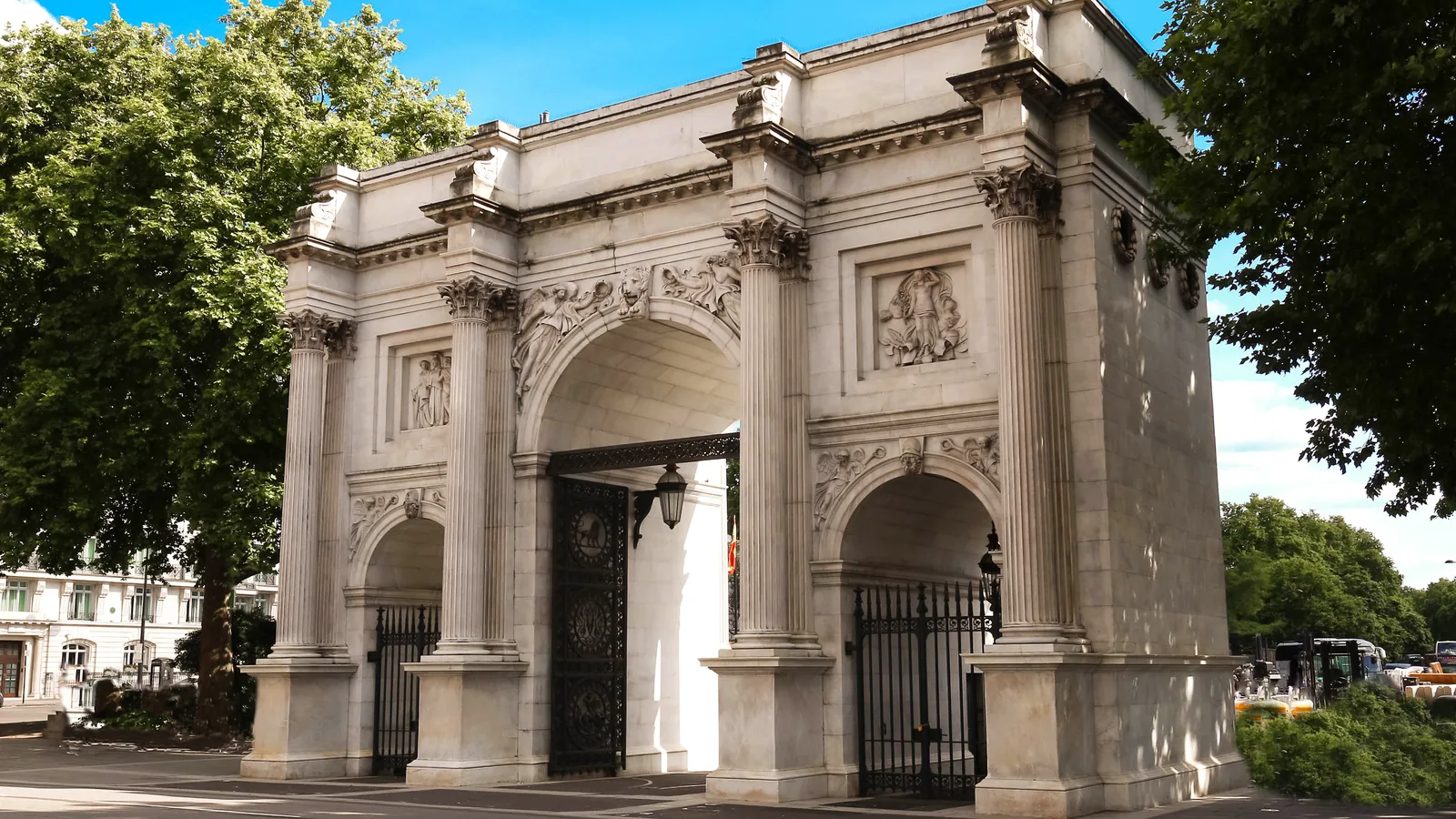
Marble Arch is the white triumphal arch at the western end of Oxford Street, on the corner of Hyde Park. John Nash designed it as the grand entrance to Buckingham Palace, and it was moved here in 1851. Today it's a landmark, meeting point and the gateway to Park Lane.
Photos
Tamim Alquhidan
From palace gate to traffic island
Nash drew the design in 1827, basing it on the Arch of Constantine in Rome and the Arc du Carrousel in Paris. Work stalled in 1830 and Edward Blore finished it in 1833 as the state entrance to Buckingham Palace's courtyard. In 1851 Thomas Cubitt took it down and rebuilt it at Cumberland Gate as a ceremonial entrance to Hyde Park; later road changes left it on its own island.
Details worth noticing
The arch is faced in Carrara marble, with decorative stone from quarries near Seravezza in Tuscany. Less well known is that three small rooms in the attic served as a police station from 1851 until at least 1968. Close by, at the junction of Park Lane, Oxford Street and Edgware Road, stood the Tyburn gallows, London's place of public execution from 1388 to 1793.
How to visit
Marble Arch is an outdoor monument, so you can see it any time. Come out of Marble Arch station and you're beside it. It works well as the start of a walk: east along Oxford Street to Selfridges, or south into Hyde Park towards Speakers' Corner and the Serpentine.
Highlights
- Designed by John Nash, completed 1833
- Moved from Buckingham Palace in 1851
- Faced in Carrara marble
- Former police station in the attic rooms
- Close to the site of the Tyburn gallows
Good to know
- Outdoor landmark, free to see at any time.
- Marble Arch Underground station is right beside it.
- Cross by the signalled crossings: the arch stands on a busy traffic island.
Frequently asked questions
Nearby
Sources: en.wikipedia.org