St Paul's Cathedral
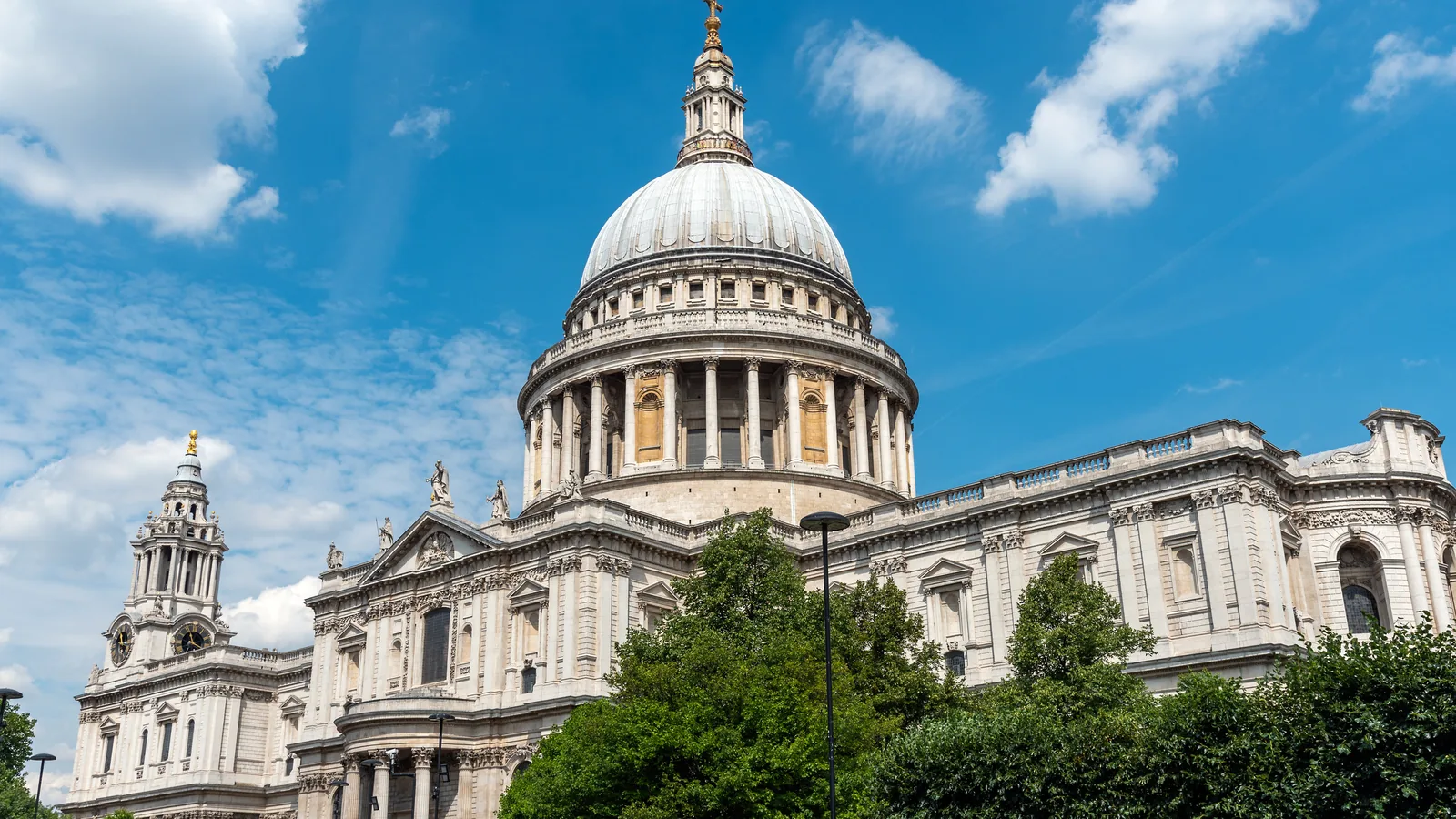
St Paul's Cathedral is Christopher Wren's domed masterpiece in the City of London, built between 1675 and 1710 after the Great Fire destroyed its predecessor. Visitors can climb into the dome, explore the crypt where Nelson and Wellington lie, or attend a service for free.
Photos
Graham Paul
Wren's cathedral
After the Great Fire of 1666 ruined Old St Paul's, Wren designed a new cathedral in the English Baroque style. It was consecrated in 1697 and completed in 1710, and the dome rises 111 metres to the cross at the top. The building is Grade I listed and remains one of the defining shapes on the London skyline.
The dome and the crypt
Climbing 259 steps brings you to the Whispering Gallery, which runs around the inside of the dome; higher galleries continue outside for views over the City. Below ground, the crypt holds the tombs of the Duke of Wellington and Admiral Lord Nelson. Wren himself was the first to be buried there, in 1723.
Visiting
Sightseeing is ticketed from Monday to Saturday, with family, group and concession rates, and you can book online or on the day. Worship is free for anyone attending a service. Bags must be no larger than 45 x 30 x 25cm and there is no cloakroom. Afterwards, cross the Millennium Bridge to Shakespeare's Globe, or continue to Borough Market. The cathedral also offers specially designed guides and tours for disabled visitors, and a family trail for children.
Highlights
- Designed by Sir Christopher Wren, completed 1710
- Dome rising 111 metres
- Whispering Gallery, 259 steps up
- Tombs of Nelson, Wellington and Wren in the crypt
Good to know
- Sightseeing tickets can be booked online or in person; discounts for families, groups and concessions.
- Attending a service is free.
- Bags over 45 x 30 x 25cm are not allowed and there is no cloakroom.
- The nearest tube station is St Paul's.
Frequently asked questions
Nearby
Sources: stpauls.co.uk · en.wikipedia.org