Trafalgar Square
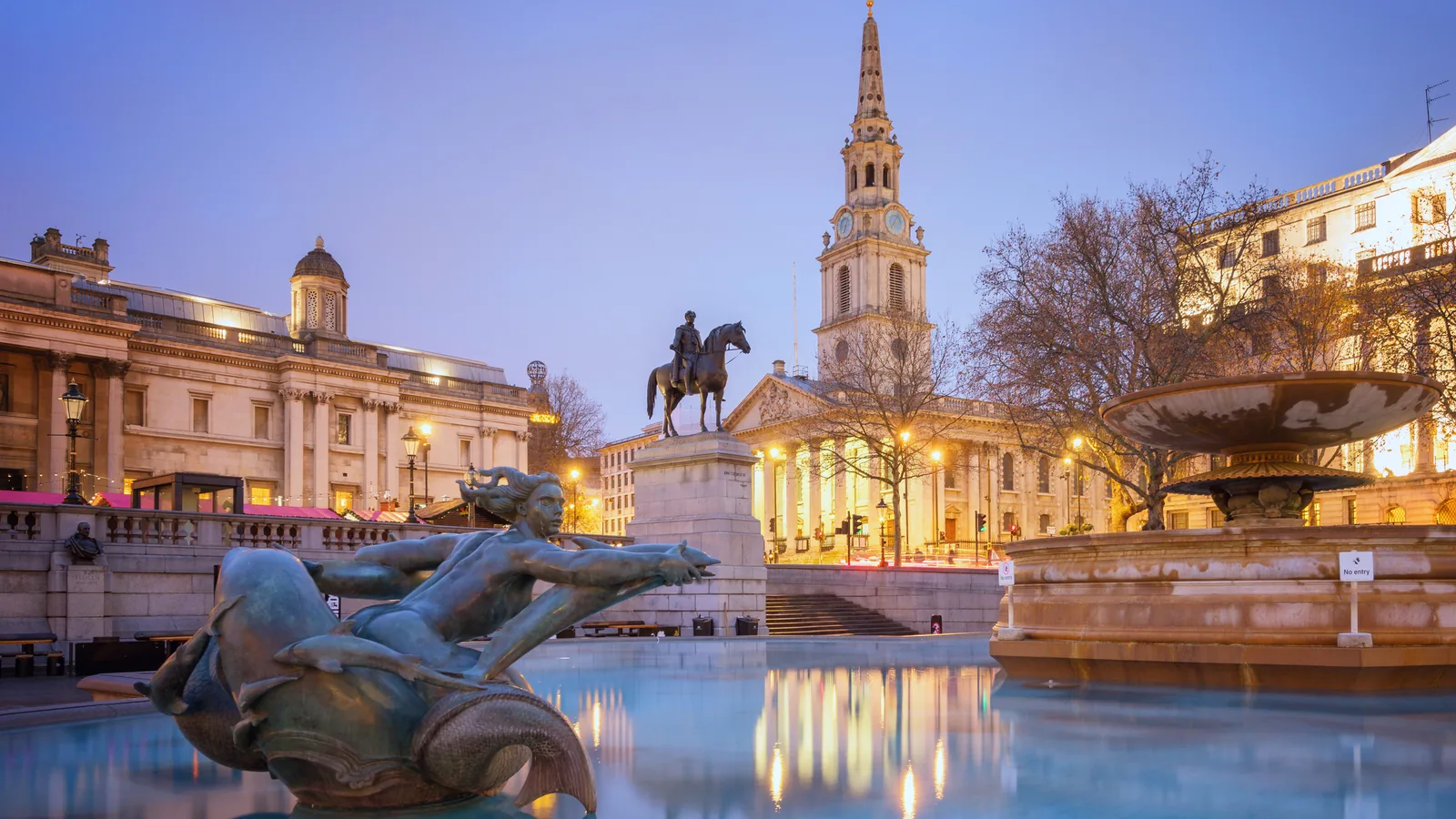
Trafalgar Square is London's best-known public space, named in 1830 and anchored by Nelson's Column, Landseer's bronze lions and the National Gallery on its north side. Run by City Hall, it hosts celebrations, rallies and the Fourth Plinth's changing contemporary artworks, and it is free to visit at any time.
Photos
Dubai0006
How the square came about
Until the 1800s much of this ground was the Great Mews, stables for Whitehall Palace. John Nash's plans for a new street from Charing Cross began in 1812, the square was named in 1830 and work on the National Gallery started in 1832. A 2003 redevelopment added a lift, a café and public toilets.
What to look for
Nelson's Column, designed by William Railton, went up in 1843 to honour victory at the Battle of Trafalgar; E. H. Baily's statue stands on a bronze platform cast from old guns. Sir Edwin Landseer's four lions arrived in 1867, and the fountains date from 1845. The Fourth Plinth shows commissioned contemporary artworks, and the Imperial Measures are set into the north terrace wall.
Using the square
Come early in the morning to see it quiet, or at weekends when rallies and events are common. Step up the terrace to the National Gallery, then take a coffee at Castiglione on Whitcomb Street or a pint at Old Shades on Whitehall. The square remains a traditional centre of national democracy and protest, and the Mayor gives access for rallies, so check what is on before you go if you want a quiet visit. The fountains run on most days.
Highlights
- Nelson's Column, completed 1843
- Landseer's bronze lions (1867)
- Fourth Plinth contemporary art commissions
- National Gallery on the north terrace
- Imperial Measures set into the terrace wall
Good to know
- The square is free and open to all; a lift gives step-free access between levels.
- There is a café and public toilets on the square.
- Events and rallies are frequent at weekends and can close parts of the square.
Frequently asked questions
Nearby
Sources: london.gov.uk