Itinerary
Bath in a day: Roman Baths, the Abbey, Pulteney Bridge and the Crescent
One day, all on foot: from the steaming Roman Baths and Bath Abbey to Pulteney Bridge, the Circus and the Royal Crescent, with a Sally Lunn bun along the way.
By VacationGuide Editors · · 5 min read
Bath is one of the few places in Britain where an entire city is the attraction. UNESCO inscribed the whole urban area as a World Heritage Site in 1987, for its Roman remains, its Georgian architecture and the way the city was designed to sit within its green hills, and in 2021 it was inscribed again as one of the Great Spa Towns of Europe. The good news for a day visitor is that almost all of it is walkable from the station. Here's how we'd spend a single day, from hot springs in the morning to a Georgian crescent at sunset.
Morning: start at the source
Bath exists because of its hot springs, so begin with the Roman Baths. Around 1,170,000 litres of hot water rise here every day, reaching the baths at about 46°C. Between 60 and 70 AD the Romans built a temple to Sulis Minerva on the site, then a bathing complex around it, in the town they called Aquae Sulis.
Some details stay with you long after the visit. Among the finds from the Sacred Spring are 130 curse tablets, many of them complaints about clothes stolen while their owners were bathing. Two thousand years on, it's reassuring to know that losing your towel is a timeless annoyance. Above the baths, the Grand Pump Room was begun in 1789 and is still used for taking the waters and for social occasions.
A practical note: you can't swim in the Roman Baths, as the water isn't safe for bathing. If you want to soak in Bath's thermal water, Thermae Bath Spa uses water drawn through more recently drilled boreholes. The Roman Baths and Pump Room together draw more than a million visitors a year, so go early, and if you're planning around a busy weekend, consider booking ahead.
For the bigger picture of why the whole city carries World Heritage status, the Bath World Heritage Centre is worth adding to your day.
Late morning: Bath Abbey
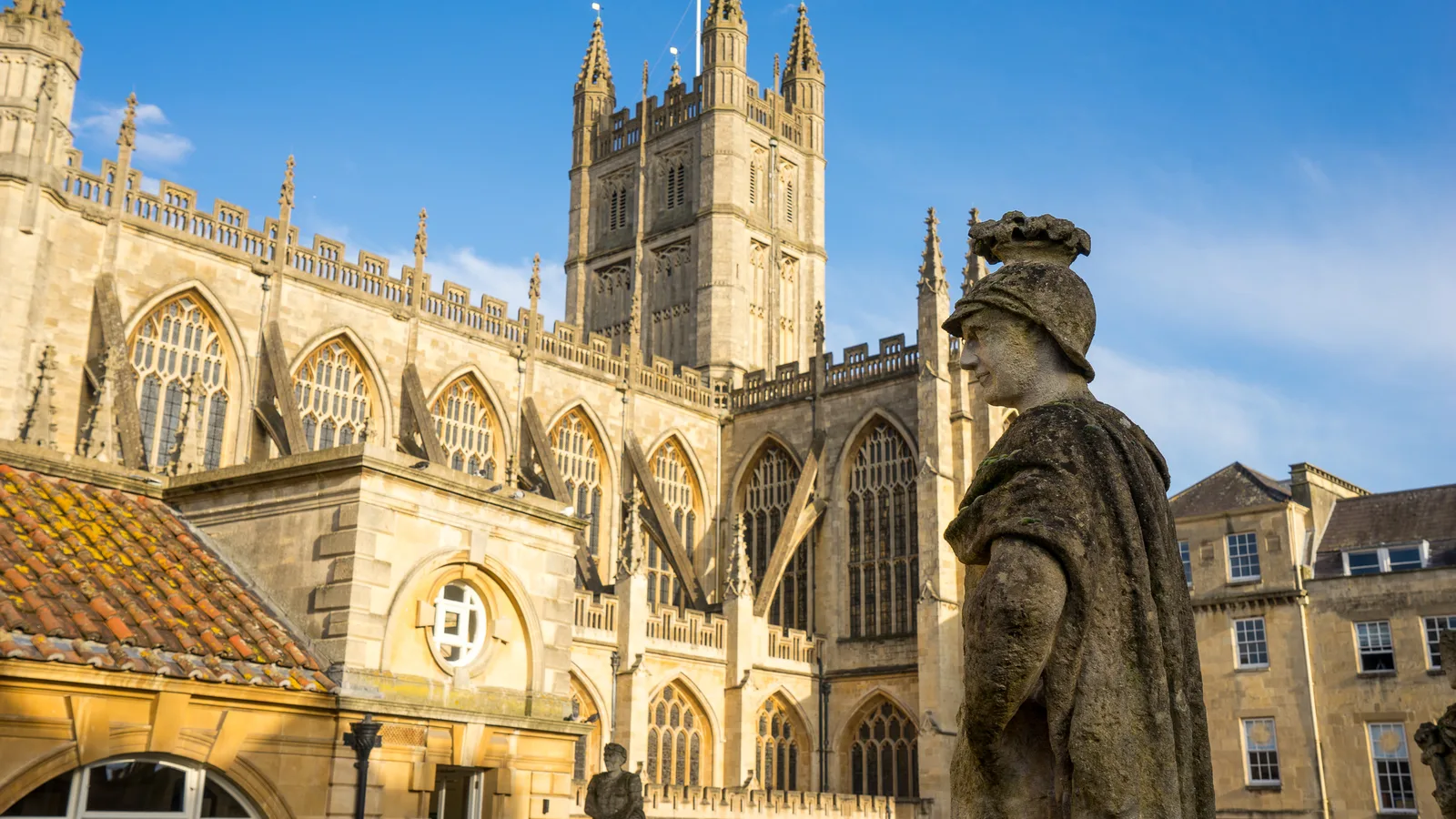
Step outside and you're in the shadow of Bath Abbey. There's been a church on this site since the 7th century, and after 1090 the Norman building served as a cathedral. The church you see now was begun in 1499 by Bishop Oliver King, who found the old cathedral "ruined to its foundations".
Before you go in, look up at the west front. The carved angels climbing ladders are said to recall a dream of Bishop King's; historians have challenged the story, but the carving is a delight either way. Inside, the fan vaulting designed by Robert and William Vertue draws your eye straight up. The tower holds a ring of ten bells and is reached by a staircase of 212 steps.
Lunch: a bun with a back story
Close to the Abbey and the Roman Baths, Sally Lunn's Historic Eating House & Museum occupies one of the oldest houses in Bath, dating from about 1482. According to legend, Sally Lunn was a French refugee who arrived in 1680 and set up a bakery here, and the Sally Lunn bun is still the house speciality. Downstairs, a small kitchen museum shows the original kitchen. If you'd rather keep lunch quick, The Honey Café and WatchHouse Bath are on our list for coffee.
Early afternoon: Pulteney Bridge
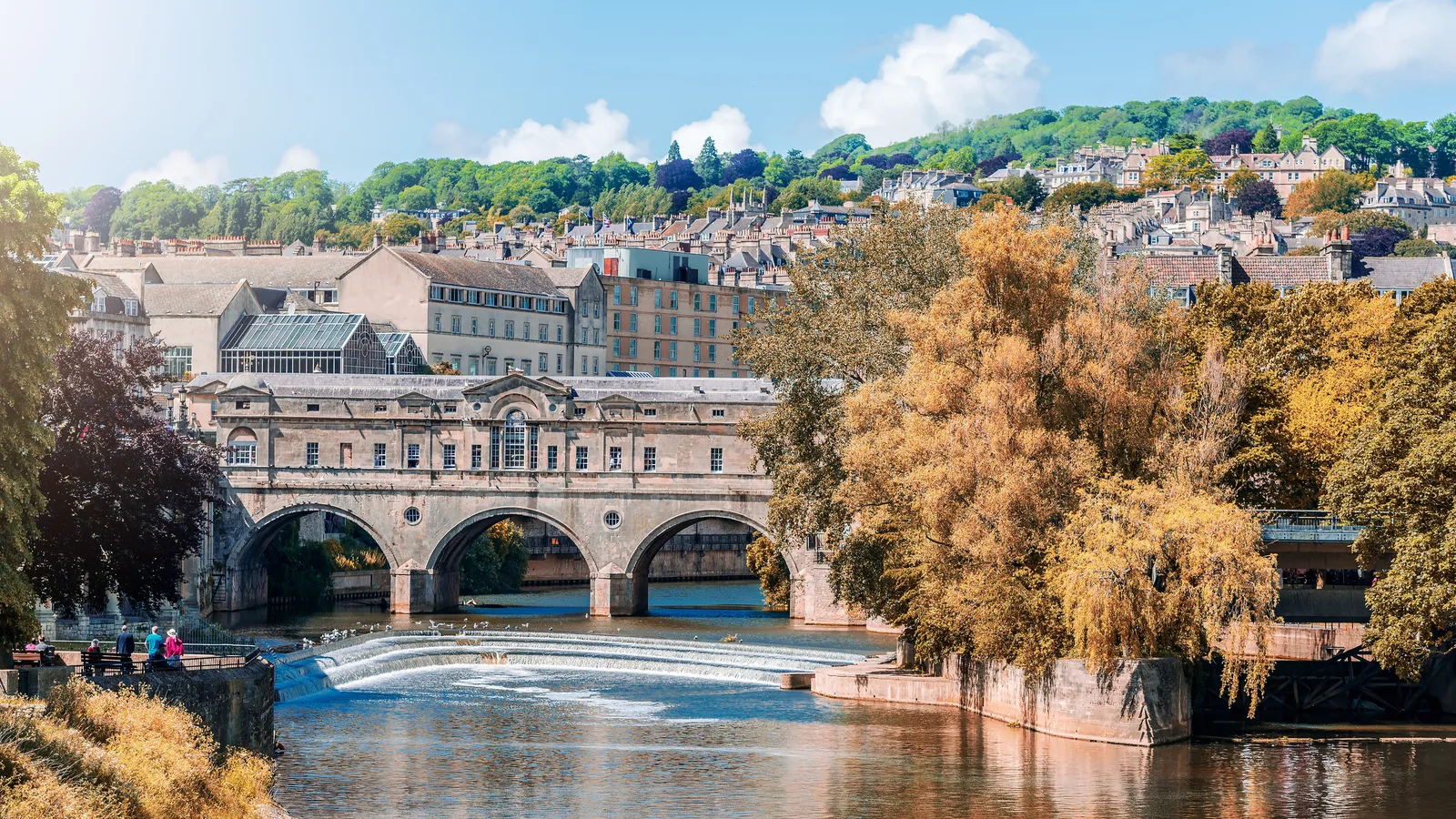
A short walk east brings you to Pulteney Bridge, designed by Robert Adam in the Palladian style and completed by 1774. It's one of only four bridges in the world with shops across its full span on both sides, the others being Florence's Ponte Vecchio, Venice's Rialto Bridge and the Krämerbrücke in Erfurt. It was built for Sir William Pulteney, who wanted a better crossing to develop his Bathwick estate, but it was named after his wife, Frances.
The best view is from the riverside below, looking back at the bridge above the curving Pulteney Weir. The weir looks timeless, but it was built between 1968 and 1972 as part of a flood-prevention scheme.
Late afternoon: the Circus and the Royal Crescent
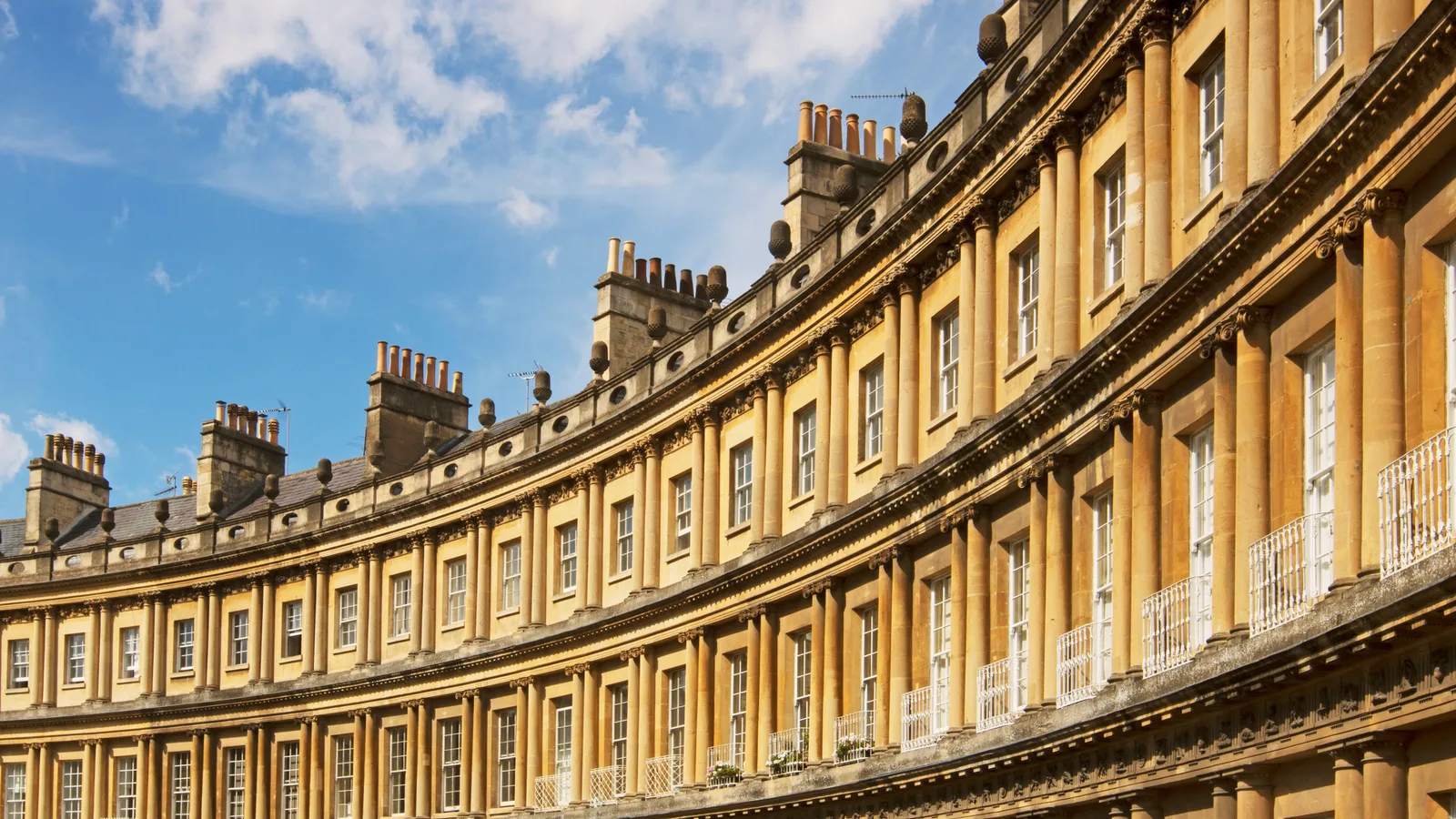
Walk back through the centre and uphill to The Circus, John Wood the Elder's ring of townhouses. From there, Brock Street leads directly to his son's masterpiece, the Royal Crescent. Designed by John Wood the Younger and built between 1767 and 1774, it's a sweep of 30 terraced houses with a uniform, grand façade.
Walk round the back, though. Each original buyer bought a section of frontage and hired their own architect for the house behind, so the rear is a jumble of heights and window styles, a contrast summed up as "Queen Anne fronts and Mary-Anne backs". In front, a sunken ha-ha divides the lawns without interrupting the view over Royal Victoria Park. No. 1 Royal Crescent is a museum run by the Bath Preservation Trust if you want to see inside a Georgian townhouse.
If you have a few more hours
Bath's setting is part of its World Heritage value, and the best way to see it is from above. South of the centre, Prior Park Landscape Garden is an 18th-century garden laid out for Ralph Allen, with advice from the poet Alexander Pope and later work by Capability Brown. Its Palladian bridge is one of only four of its design left in the world. The National Trust looks after it, and it opened to the public in 1996.
About five minutes from the garden, the Bath Skyline is a six-mile circular walk with views across the city. On the way you might spot Sham Castle on the hillside, and the Bath Botanical Gardens are another green option if you'd prefer to stay closer in.
Where to eat in the evening
For dinner, The Circus Restaurant, Sotto Sotto and The Botanist Bath are all on our shortlist, and The Grapes and The Boathouse suit a pint.
Our verdict: if you only have one day
Roman Baths at opening, the Abbey straight after, a Sally Lunn bun for lunch, Pulteney Bridge in the early afternoon, then the Circus and the Royal Crescent as the light softens. It's a route that follows the city's own story, from Roman spring to Georgian showpiece, and it barely needs a map.
Plan it
- Getting there: Bath Spa station is in the city centre, with regular trains from London Paddington; Bristol Temple Meads is about 15 minutes away by train. Driving? Use one of the three park and ride services, which run seven days a week and take about ten minutes into the centre.
- Where to base yourself: If you stay over, staying central keeps everything walkable. The Gainsborough Bath Spa, the Apex City of Bath Hotel and Hampton by Hilton Bath City cover a range of budgets.
- Best time of year: Bath works year-round, since the Roman Baths, the Abbey and Sally Lunn's are all indoors. Save the warmer, drier months for Prior Park and the Skyline walk.
- Booking tips: Arrive early for the Roman Baths, which see more than a million visitors a year, and book weekend dinners in advance.
Ready to go? Build a day-by-day plan for Bath.
Plan a trip to BathPlaces in this guide
Frequently asked questions
- Can you swim in the Roman Baths?
- No. Visitors can tour the baths and museum but can't enter the water, which isn't safe for bathing. Thermae Bath Spa, nearby, lets you bathe in Bath's thermal water drawn from newer boreholes.
- Is Bath walkable in a day?
- Yes. Bath Spa station is in the city centre, and the Roman Baths, Bath Abbey, Pulteney Bridge, the Circus and the Royal Crescent are all within walking distance of each other.
- Why is Bath a World Heritage Site?
- UNESCO inscribed the whole city in 1987 for its Roman remains, its Georgian architecture and planning, and its green setting. In 2021 it was inscribed again as one of the Great Spa Towns of Europe.
Sources
- unesco.org.uk/our-sites/world-heritage-sites/city-of-bath-the-great-spa-towns-of-europe
- en.wikipedia.org/wiki/Roman_Baths_(Bath)
- en.wikipedia.org/wiki/Bath_Abbey
- visitbath.co.uk/food-and-drink/sally-lunns-historic-eating-house-p29431
- en.wikipedia.org/wiki/Pulteney_Bridge
- en.wikipedia.org/wiki/Royal_Crescent
- en.wikipedia.org/wiki/Prior_Park_Landscape_Garden
- bathchristmasmarket.co.uk/getting-to-bath
Related guides
Weekend · Bath
Bath on a budget
Georgian splendour without the Georgian estate to pay for it.
6 min read
Itinerary · The Cotswolds
The Cotswolds village by village: Broadway Tower, Sudeley and Blenheim
Follow the Cotswold Way from Chipping Campden's Market Hall to Broadway Tower and Katherine Parr's grave at Sudeley, then finish at Blenheim in Capability Brown's parkland.
5 min read
Itinerary · Inverness and Loch Ness
Inverness and Loch Ness in two days: castles, cairns and a battlefield
Two days, one river, one very deep loch. Our plan for Inverness takes in Culloden, the Clava Cairns, Urquhart Castle and a boat on Loch Ness, with time left for the city itself.
5 min read