Itinerary
The Cotswolds village by village: Broadway Tower, Sudeley and Blenheim
Follow the Cotswold Way from Chipping Campden's Market Hall to Broadway Tower and Katherine Parr's grave at Sudeley, then finish at Blenheim in Capability Brown's parkland.
By VacationGuide Editors · · 5 min read
The Cotswolds are easy to love and hard to plan. The honey-coloured villages are close together, the lanes are narrow, and the famous names pull most of the crowds. Our way in is to follow the line of the escarpment from north to south, using the Cotswold Way as a spine. Start in Chipping Campden and Broadway, climb to Broadway Tower, drop to Winchcombe and Sudeley Castle, and finish with a day at Blenheim Palace on the Oxfordshire side. Here is how it fits together, village by village.
Chipping Campden: where the trail begins
The Cotswold Way is a 102-mile National Trail that starts in Chipping Campden and ends at Bath Abbey, mostly following the Cotswold escarpment. Even if you never plan to walk more than a mile of it, Chipping Campden is the right place to start a trip.
The centrepiece of the High Street is the Market Hall, built in 1627 by Sir Baptist Hicks, the town's wealthy benefactor, to give traders shelter. The National Trust looks after it, and it is open from dawn to dusk. Walk under its arches early, before the coaches arrive, and the street feels as if it was built yesterday for you alone.
Broadway and the tower on the hill
The first section of the Cotswold Way leaves Chipping Campden and climbs over the hills to Broadway Tower before dropping into Broadway itself. The National Trail describes Broadway as a historic village with links to the Arts and Crafts movement.
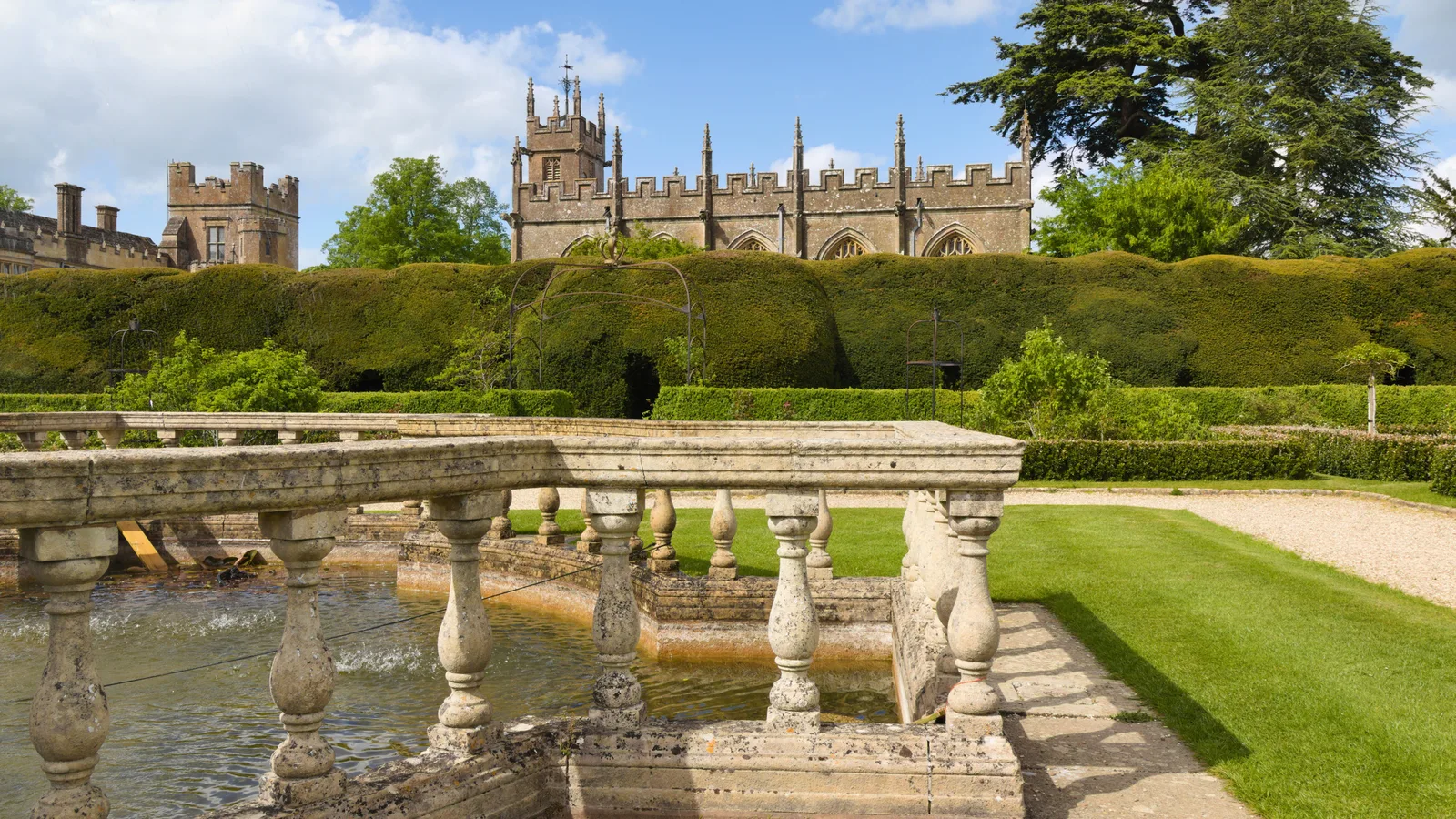
The tower is the reason to walk rather than drive. Its story begins with Capability Brown, the landscape designer, who came up with the idea. James Wyatt designed it for George William, 6th Earl of Coventry, and it was finished in 1798. Wyatt's "Saxon Tower" is a pleasingly eccentric folly of turrets, battlements, gargoyles and balconies. It stands on Beacon Hill, 312 metres above sea level and the second-highest point in the Cotswolds. The tower says that on a clear day you can see 16 counties from its roof.
It has had a crowded life for a folly:
- In 1822 Sir Thomas Phillipps set up a printing press inside it.
- William Morris and other Arts and Crafts figures used it as a holiday retreat. Morris's campaign to protect ancient buildings began while he was staying there.
- From 1960 a nuclear bunker below the hill was used by the Royal Observer Corps to monitor nuclear attack. It closed in 1991, and you can book a tour.
- It opened to visitors in 1976. Today it is family-owned, on a 200-acre estate with its own herd of red deer.
Stanton, Stanway and on to Winchcombe
South of Broadway, the Cotswold Way passes through Stanton, which the National Trail calls an unspoiled Cotswold village. It then crosses the parkland of the Stanway Estate to the hamlet of Stanway. These are short, gentle stretches, and the best way to see this corner is on foot between villages rather than by car from car park to car park.
Winchcombe is the next town. Near it, the trail passes Belas Knap, a Neolithic long barrow, and then climbs onto Cleeve Hill, the highest point of the whole Cotswold Way. If you walk only one longer stretch on this trip, make it Winchcombe to Cleeve Hill and back.
Sudeley Castle: queens, roses and a royal grave
Just outside Winchcombe, Sudeley Castle & Gardens is a private home with one of the richest stories in the region. Ralph Boteler built the present castle in 1442. Richard III used it, and Henry VIII and Anne Boleyn visited. Katherine Parr, Henry's last queen, married Thomas Seymour and died at Sudeley in 1548, soon after giving birth to her daughter. She is buried in St Mary's chapel in the grounds. Elizabeth I was entertained at Sudeley three times. The castle and chapel were left in ruins after the Civil War and were restored much later. The family still lives there and opened it to the public around 1969.
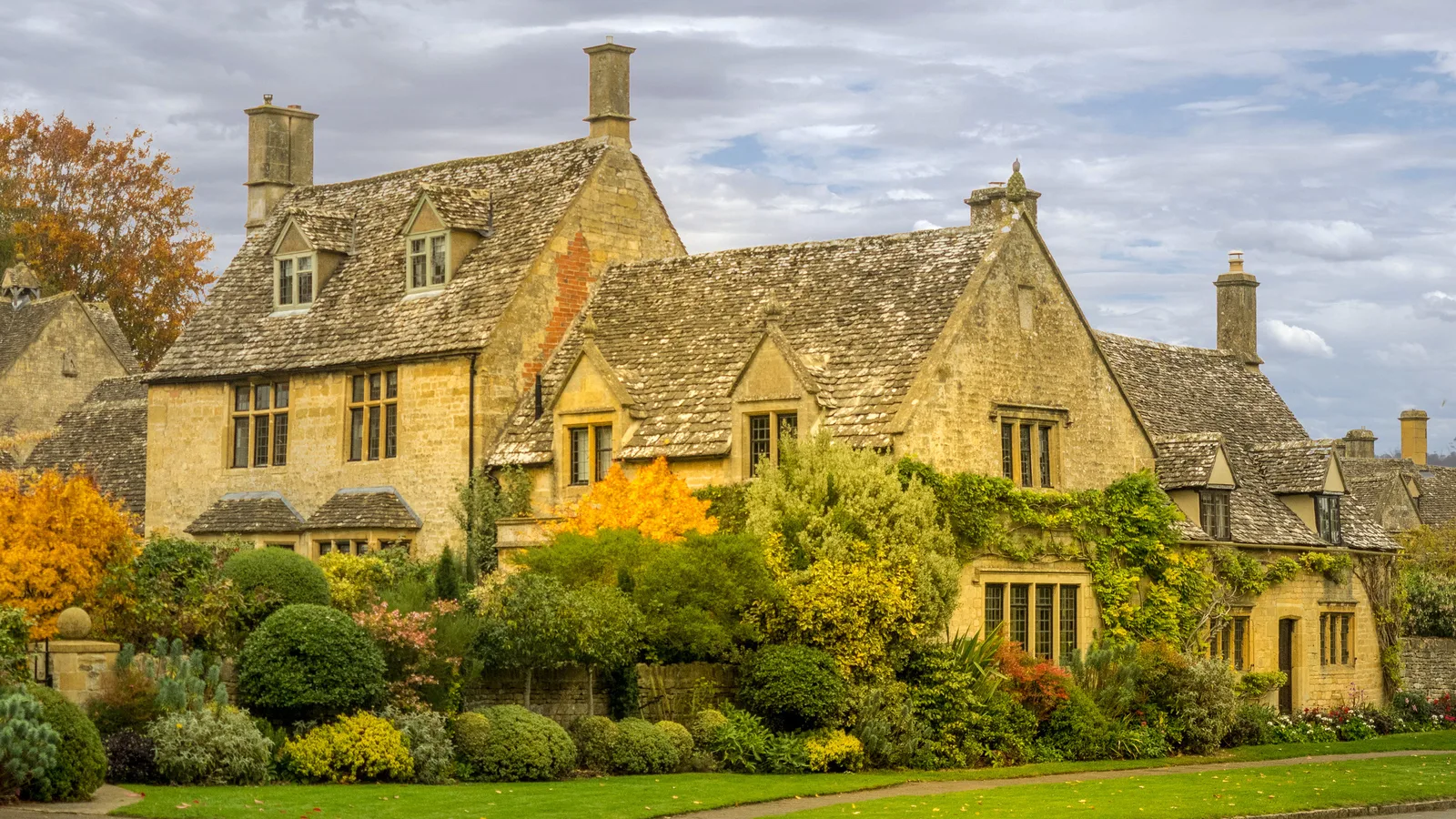
The gardens are the draw for many visitors. There are nine of them, and the centrepiece is the Queen's Garden. It is named after four queens who are said to have admired its roses: Anne Boleyn, Katherine Parr, Lady Jane Grey and Elizabeth I. Go in early summer if roses matter to you.
The Cotswold Way's midpoint is Painswick, with its Rococo Garden. You won't fit Bath into a short break as well, but Painswick makes a good end to a more southern day if you have a car.
Blenheim Palace: the big day out
Blenheim Palace sits at Woodstock on the Oxfordshire side and deserves a full day. Parliament paid for it between 1705 and 1724 as the nation's gift to John Churchill, 1st Duke of Marlborough, after his victory at the Battle of Blenheim in 1704. Sir John Vanbrugh designed it with major input from Nicholas Hawksmoor, and it is considered Britain's finest Baroque building. Capability Brown later turned the formal grounds into the pastoral landscape you walk through today. Sir Winston Churchill was born there, and UNESCO made the palace and estate a World Heritage Site in 1987. The estate covers 2,100 acres, so set aside as much time for the park as for the state rooms.
It is a neat ending in one more way. Capability Brown, who came up with the idea for Broadway Tower at the start of the trip, also shaped the park where it finishes.
If you only have a weekend
- Day one: Start in Chipping Campden at the Market Hall. Walk the first section of the Cotswold Way to Broadway Tower and down into Broadway. Have lunch in Broadway.
- Day two: Spend the morning at Sudeley Castle and Winchcombe, and climb Cleeve Hill if the weather is good.
- With a third day: Go to Blenheim.
Worth it? Yes, if you trade some of the honeypots for a few miles on foot. The walking is what makes this trip.
Plan it
- Getting there: Direct trains run from London Paddington to Moreton-in-Marsh and Cheltenham Spa, and Kingham and Charlbury also have stations on the line. From Moreton-in-Marsh, Stagecoach bus 3 runs to Blockley, Broadway, Chipping Campden and Stratford-upon-Avon. From Charlbury, the Stagecoach S3 serves Woodstock for Blenheim. Check timetables, because rural buses can be infrequent.
- Where to base yourself: Chipping Campden or Broadway for the northern villages, the tower and Sudeley. Woodstock or Oxford if Blenheim is the main event.
- Best time of year: Late spring and summer for walking and for Sudeley's roses, and autumn for the woods on the escarpment. Expect the best-known villages to be busiest at weekends and in school holidays.
- Booking tips: Book the Broadway Tower bunker tour in advance. Check opening dates for Sudeley and Blenheim before you go, because the houses and gardens open seasonally and sometimes close for events.
Ready to go? Build a day-by-day plan for the Cotswolds.
Plan a trip to the CotswoldsPlaces in this guide
Frequently asked questions
- Where does the Cotswold Way start and finish?
- It runs 102 miles from Chipping Campden to Bath Abbey, mostly along the Cotswold escarpment, and is divided into 15 sections.
- Who is buried at Sudeley Castle?
- Katherine Parr, the last of Henry VIII's six wives. She died at Sudeley in 1548 and is buried in St Mary's chapel in the castle grounds.
- Can you visit the Cotswolds without a car?
- Yes, with some planning. Direct trains from London Paddington serve Moreton-in-Marsh, Kingham, Charlbury and Cheltenham Spa, and buses link them with villages such as Broadway, Chipping Campden and Woodstock.
Sources
Related guides
Itinerary · Bath
Bath in a day: Roman Baths, the Abbey, Pulteney Bridge and the Crescent
One day, all on foot: from the steaming Roman Baths and Bath Abbey to Pulteney Bridge, the Circus and the Royal Crescent, with a Sally Lunn bun along the way.
5 min read
Itinerary · Inverness and Loch Ness
Inverness and Loch Ness in two days: castles, cairns and a battlefield
Two days, one river, one very deep loch. Our plan for Inverness takes in Culloden, the Clava Cairns, Urquhart Castle and a boat on Loch Ness, with time left for the city itself.
5 min read
Itinerary · The Isle of Skye
Your first trip to Skye: roads, crowds, weather and the big sights
Skye rewards planning. How to get there, drive its single-track roads well, beat the crowds at the Storr and the Fairy Pools, and fit in the Quiraing and Dunvegan Castle.
6 min read