Culture
Cardiff and its castles: a Victorian fantasy, a red tower and a free museum
Two thousand years of history in the city centre, a fairytale castle above the Taff gorge and two of Wales's best free museums: our plan for Cardiff's castles and collections.
By VacationGuide Editors · · 5 min read
Cardiff's history is unusually easy to read. Stand in the middle of the city and you are looking at a Roman fort, a Norman keep and the extravagant Victorian dream of one of the richest men of his age, all within the same walls. Drive a few miles north and the same patron and architect built a second, even more fanciful castle above a wooded gorge. Add two national museums that cost nothing to enter, and you have a weekend that is as rewarding in the rain as in the sun. Here is how we would do it.
Cardiff Castle: two thousand years in one compound
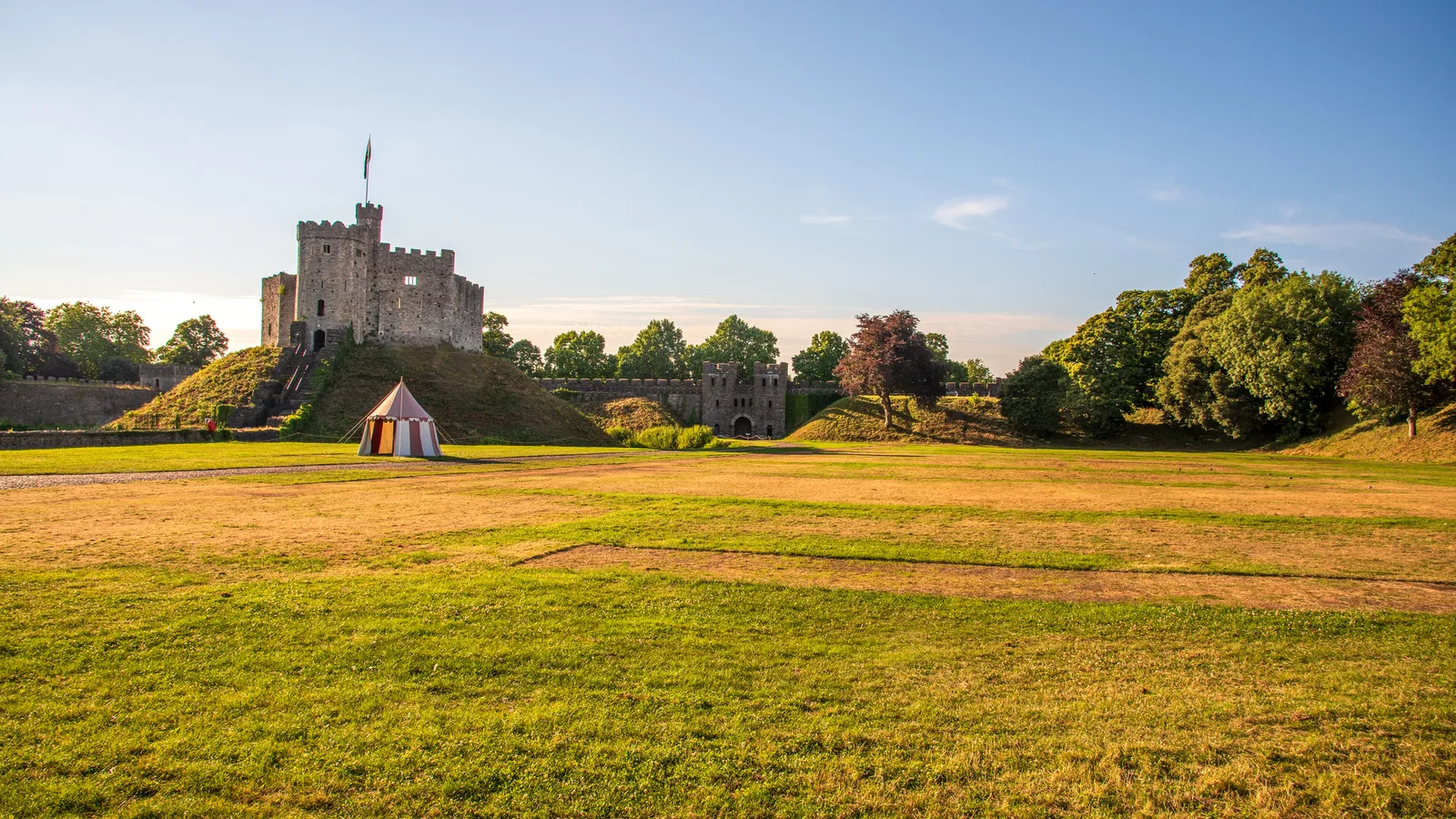
Cardiff Castle occupies a site the Romans chose in the late 50s AD, at a river crossing with easy access to the sea. Excavations suggest four forts of different sizes stood here over time, and you can still see remains of the last stone fort; look closely at the Cardiff Castle Walls as you walk around the outside.
After the Norman Conquest a wooden motte-and-bailey castle went up inside the old Roman footprint, and later lords rebuilt it in stone. The transformation that defines the castle today came in the Victorian era, when the 3rd Marquess of Bute, rich on mineral wealth from his Welsh estates, worked with the architect William Burges to turn the medieval fortress into a lavish Gothic Revival home.
The 20th century left its mark too. The 4th Marquess offered the castle for wartime defence, and air raid shelters built in tunnels within the walls could hold almost 2,000 people. After he died in 1947, the castle and its remaining parkland were given to the city.
While you are inside the grounds, Firing Line: Cardiff Castle Museum of the Welsh Soldier adds a military chapter to the story.
Our verdict: the Burges interiors are the reason to come. Allow time to look properly rather than rushing between rooms.
The Animal Wall and Bute Park
Leave the castle and look along Castle Street for the Animal Wall, another Burges idea, brought to life by architect William Frame. Carving began in the late 1880s, and the original wall stood directly outside the castle. The first animals included lions, a lynx, a bear, a sea lion, a wolf, a pair of apes and a hyena; you can tell them by their glass eyes. When Duke Street was widened in 1923, the wall moved west and six more creatures joined, including a pelican and an anteater. It was cleaned and repaired in 2010.
Behind the wall is Bute Park, the green heart of the city and an easy place to walk off a morning indoors.
Castell Coch: the red castle in the woods
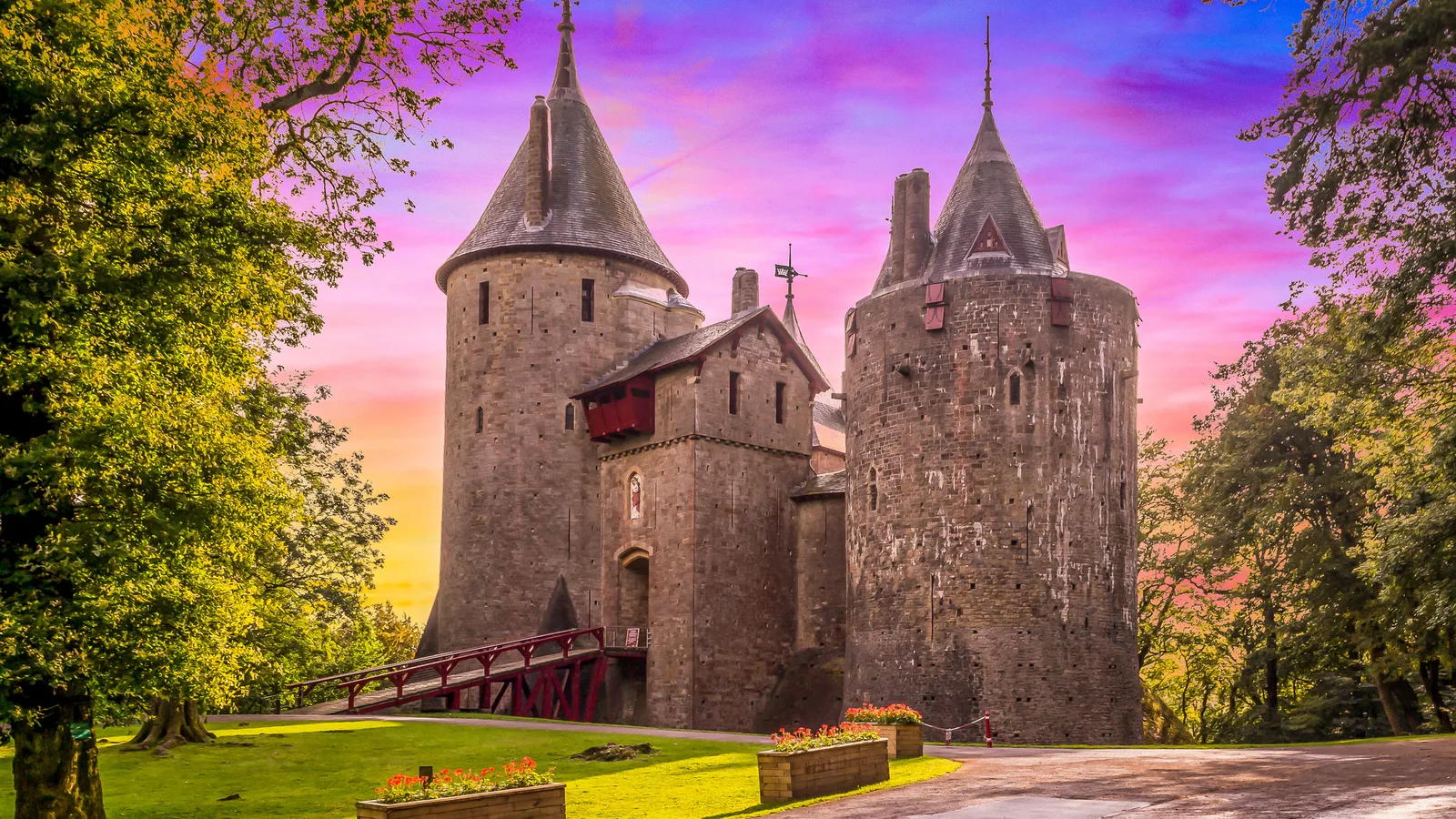
Castell Coch, Welsh for "red castle", stands above the village of Tongwynlais overlooking the River Taff, about 10.6km north-west of Cardiff. The Normans built a motte-and-bailey here after 1081, and Gilbert de Clare raised the first stone castle between 1267 and 1277. It was probably destroyed in a Welsh rebellion in 1314 and lay in ruins for centuries.
The Bute family acquired the ruins in 1760, and in the 1870s the 3rd Marquess turned once more to Burges, this time for a summer retreat. The exterior, with its three conical-roofed towers, was finished by 1879; the interiors were completed in 1891, a decade after Burges died. Inside, the Drawing Room has a Three Fates fireplace and murals from Aesop's Fables, and Lady Bute's Bedroom has a Moorish feel.
Bute also planted a vineyard below the castle in 1875. Wine-making stopped during the First World War and the vines were pulled up in 1920. The castle passed into state care in 1950 and has been run by Cadw since 1984. It is Grade I listed, and the beech woods of the Taff Gorge around it are a Site of Special Scientific Interest.
Our tip: see Cardiff Castle first. Once you have seen Burges at full volume in the city, the more compact fantasy of Castell Coch makes even more sense.
St Fagans: a museum of everyday Wales
St Fagans National Museum of History describes itself as a people's museum, telling Welsh history through everyday lives. It sits in the grounds of St Fagans Castle, a late 16th-century manor house given to the people of Wales in 1948. Since then more than forty original buildings from different periods have been moved to its 100-acre parkland, among them houses, a farm, a school, a chapel and a Workmen's Institute.
Craftspeople demonstrate traditional skills, native breeds graze the fields and farming demonstrations run daily. Entry is free, thanks to Welsh Government support. It is the kind of place where an hour turns into an afternoon, so don't squeeze it.
National Museum Cardiff
Back in the civic centre at Cathays Park, National Museum Cardiff holds Wales's national art, geology and natural history collections, and entry is free. Work on the building began in 1912; it opened to the public in 1922 and was officially opened in 1927. The architects were Arnold Dunbar Smith and Cecil Brewer, and what stands today is a heavily truncated version of their design, which tells you something about the scale of Edwardian ambition in Cardiff.
The art galleries span around five centuries and include a major Impressionist collection, much of it from Margaret and Gwendoline Davies, granddaughters of the industrialist David Davies, who left their French art to the museum in the 1950s and 1960s. Look for works by Monet, Renoir's La Parisienne and a bronze cast of Rodin's The Kiss. The Evolution of Wales gallery runs from the Big Bang through dinosaurs and woolly mammoths, which makes it an easy sell for children. The Gorsedd Gardens sit right outside.
If you only have one day
- Morning: Cardiff Castle, then the Animal Wall and a walk in Bute Park.
- Lunch: Browse Cardiff Market in the city centre.
- Afternoon: National Museum Cardiff for the Impressionists.
- If you have a car: swap the museum for Castell Coch.
Save St Fagans for a second day; it deserves the time.
Plan it
- Getting there: Cardiff Central station puts you a short walk from the castle and city centre. Castell Coch is about 10.6km north-west of the city, above Tongwynlais.
- Where to base yourself: The city centre near the castle keeps everything walkable; The Angel Hotel and Park Plaza Cardiff are both central. Cardiff Bay, with the Wales Millennium Centre, is a livelier waterfront alternative.
- Best time of year: Any time; the castles and museums are largely indoors, though St Fagans and Bute Park are best on a dry day.
- Booking tips: St Fagans and National Museum Cardiff are free, but check their websites for special exhibitions. Check Cardiff Castle and Castell Coch (Cadw) for tickets and seasonal opening before you go.
Ready to go? Build a day-by-day plan for Cardiff.
Plan a trip to CardiffPlaces in this guide
Frequently asked questions
- Is St Fagans free to visit?
- Yes. Entry to St Fagans National Museum of History is free thanks to Welsh Government support. National Museum Cardiff is also free.
- How far is Castell Coch from Cardiff?
- Castell Coch stands above the village of Tongwynlais, about 10.6km north-west of Cardiff city centre, overlooking the River Taff.
- Who designed Cardiff Castle's interiors?
- The architect William Burges, working for the 3rd Marquess of Bute, who turned the medieval fortress into a Gothic Revival residence. Burges also rebuilt Castell Coch.
Sources
Related guides
Culture · Cambridge
Cambridge colleges and gardens: King's, the Backs and the Botanic
Fan vaulting, a river lined with college lawns, a free museum of world standing and 40 acres of botanic garden: how to spend a rewarding day or two in Cambridge.
5 min read
Culture · Glasgow
Glasgow for free: a day of great museums that cost you nothing
Kelvingrove, the Riverside Museum, a 1471 house and a medieval cathedral that came through the Reformation intact: Glasgow's best rooms are free. This is how to fit them into one day.
6 min read
Culture · Oxford
Oxford for first-timers: colleges, free museums and Port Meadow
The view of Radcliffe Square from St Mary's tower, lunch in the 1774 Covered Market, dinosaurs and the dodo for free, then a walk across Port Meadow to the Trout.
5 min read