Culture
Oxford for first-timers: colleges, free museums and Port Meadow
The view of Radcliffe Square from St Mary's tower, lunch in the 1774 Covered Market, dinosaurs and the dodo for free, then a walk across Port Meadow to the Trout.
By VacationGuide Editors · · 5 min read
Oxford can feel like a city of closed doors: college gates, porters' lodges, quads you glimpse through an arch. It is more open than it looks. Its finest museums are free, the market has traded under the same roof since 1774, and a short walk from the centre takes you to a meadow that has been common land since the Domesday Book. This guide is for a first visit, and it is built around what you can actually get into.
Begin at the centre: Radcliffe Square from above
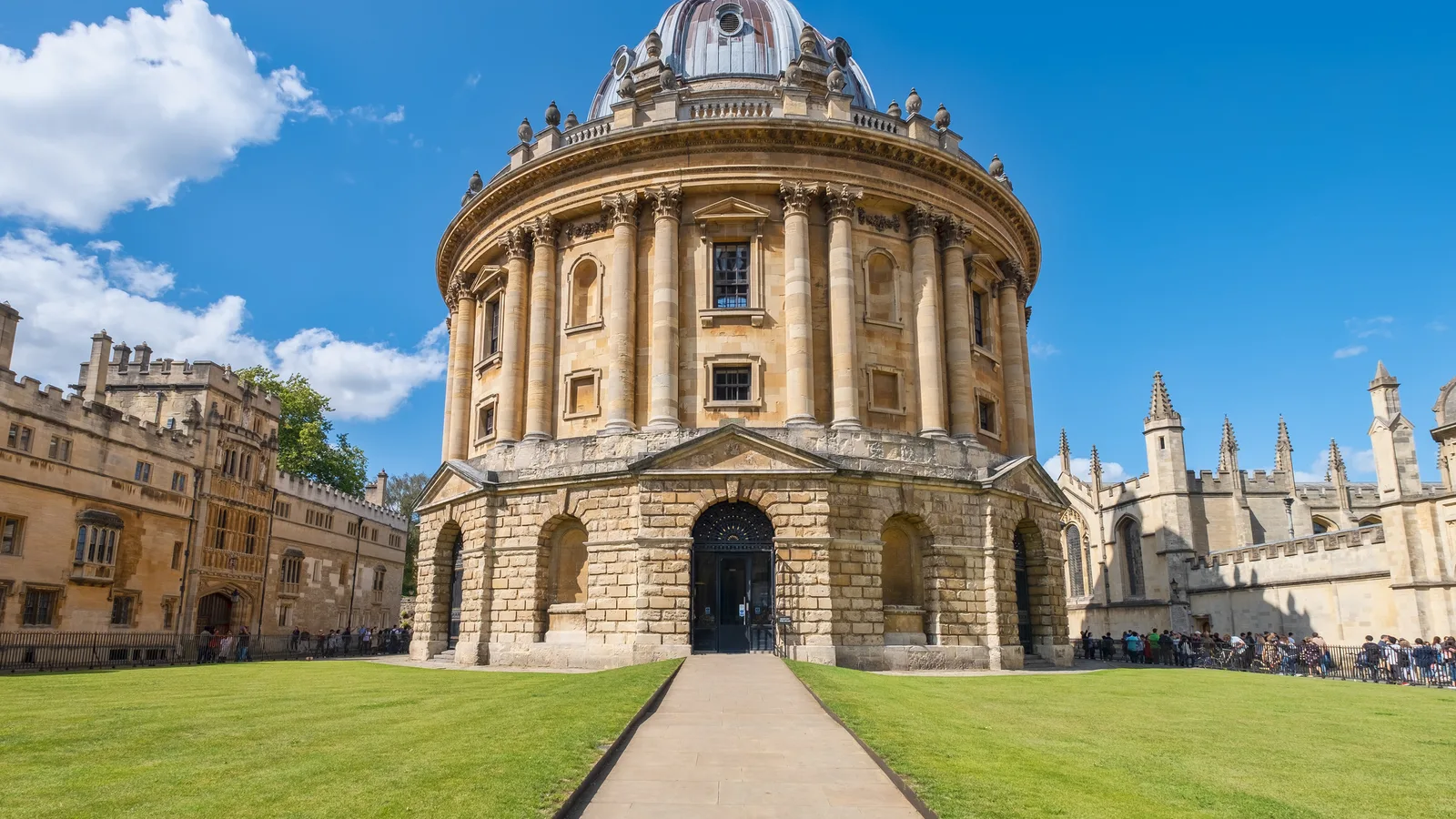
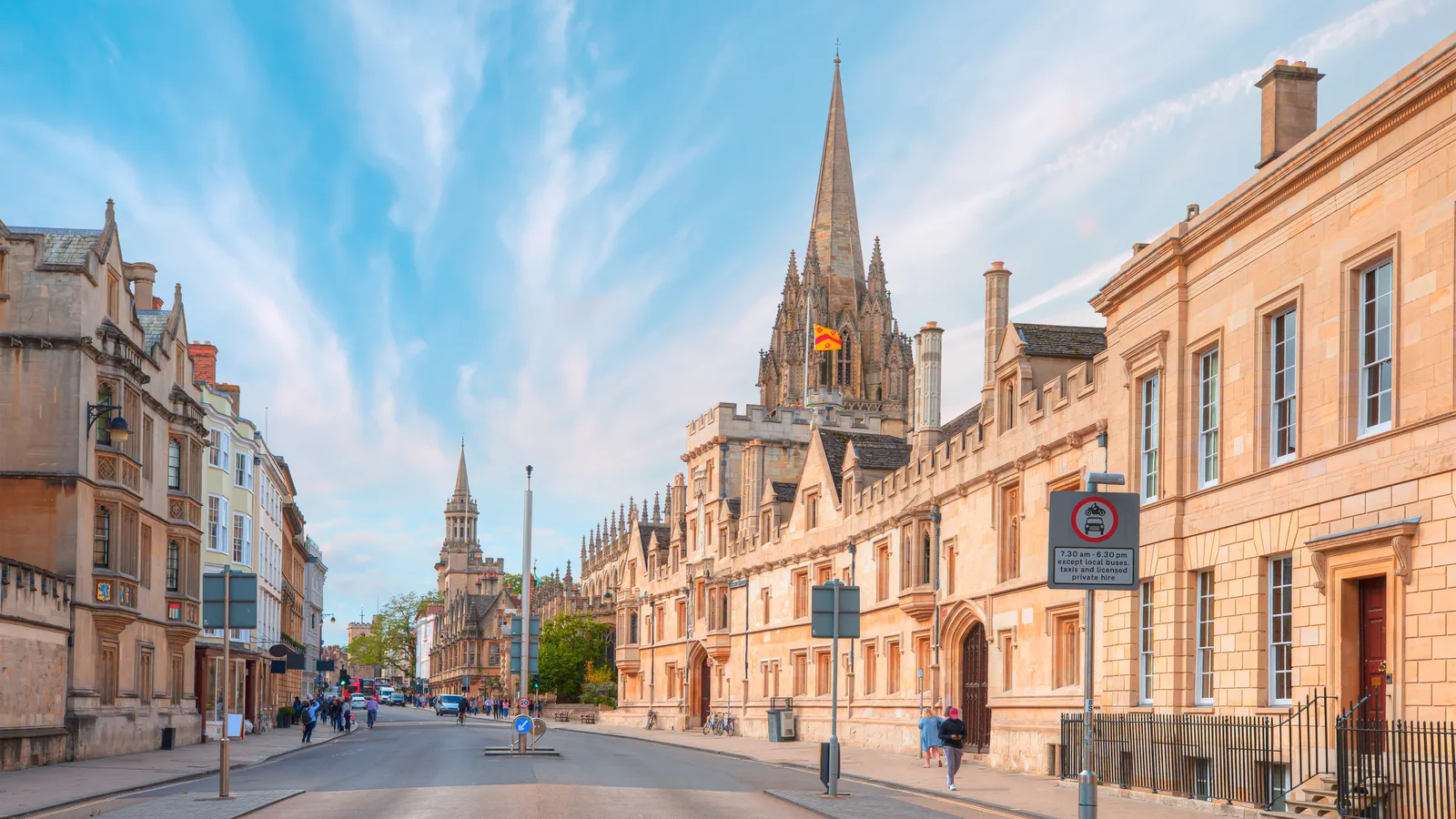
Start on the High Street at the University Church of St Mary the Virgin. It is the building the university grew from, and its first. The tower, the oldest part of the present church, dates from around 1270 and is open to visitors for a fee. From the top you look straight down on Radcliffe Square, the Radcliffe Camera, Brasenose and All Souls. Nowhere gives you a better first view of the city.
The church is also full of history. The Oxford Martyrs, Latimer, Ridley and Cranmer, were tried for heresy here in 1555. John Henry Newman was vicar from 1828 and preached sermons that packed the church with undergraduates, before he resigned in 1843 and later became a Roman Catholic.
From the square, the Bodleian Libraries run tours that are best booked ahead, and they have free exhibitions. If you would rather have someone explain the colleges as you go, Oxford Official Walking Tours are listed on our pages. Opening arrangements for individual colleges vary, so check each one before you set your heart on a particular quad.
The Covered Market: lunch under a 1774 roof
Two minutes away, the Covered Market officially opened on 1 November 1774. It was built to clear what were described as untidy, messy and unsavoury stalls from Oxford's main streets. John Gwynn, who also designed Magdalen Bridge, drew up the plans and the High Street front. It opened with twenty butchers' shops, and stalls for produce, dairy, fish and pork followed. It is now Grade II listed. About half its traders still sell food: greengrocers and butchers, some making Oxford sausage, alongside bakeries, sandwich shops and gift shops. Bonner's greengrocer has traded here since 1952, and Ben's Cookies is here too.
Our pick for a first-timer's lunch is to graze the market rather than sit down. There are four entrances from the High Street and four from Market Street, and the Golden Cross alley leads in from Cornmarket.
The free museums: the Ashmolean, dinosaurs and the Pitt Rivers
Oxford's museums are its best free entertainment.
- The Ashmolean, founded in 1683, is described by the university as Britain's first public museum. Admission is free, though special exhibitions are ticketed.
- The Oxford University Museum of Natural History was built between 1855 and 1860 to a neo-Gothic design largely by Benjamin Woodward. Under its glass roof are dinosaurs and the dodo, the bird famous from a 1651 painting by Jan Savery. On 30 June 1860 the building hosted the "Great Debate" on Darwin's newly published theory of evolution, between Samuel Wilberforce, Bishop of Oxford, and Thomas Huxley, later nicknamed "Darwin's bulldog". Almost 500 people attended, and no accurate record of what was said survives. Admission is free.
- The Pitt Rivers Museum is reached only through the Natural History Museum and is free as well. Do both in one visit.
If you have children with you, the Oxford Illusion Museum is a different sort of afternoon. Book lovers should leave time for Blackwell's Bookshop.
Port Meadow: Oxford's great outdoors
Walk north through Jericho and the city stops abruptly at Port Meadow. This large stretch of open common land lies along the east bank of the Thames, which is known locally as the Isis, and runs from Jericho to Wolvercote. The Freemen of Oxford's right to graze animals there free of charge was recorded in the Domesday Book in 1086 and has been used ever since. Horses, cattle and geese still graze it. The meadow is a Site of Special Scientific Interest, and it sometimes floods in winter. When the floodwater freezes it becomes a huge skating ground.
Follow the meadow north to The Trout Inn at Lower Wolvercote, by Godstow Bridge and right on the Thames. The Grade II listed pub dates mainly from the 17th century and turns up in Brideshead Revisited, in Colin Dexter's Inspector Morse stories and in Philip Pullman's La Belle Sauvage. A walk across the meadow with a drink at the end is our favourite Oxford afternoon. The village of Binsey lies to the meadow's west, and The Perch is another pub to look up for the way back.
Pubs with a past
Back in the centre, the Turf Tavern is hidden at the end of St Helen's Passage, once called Hell Passage, between Holywell Street and New College Lane near the Bridge of Sighs. One side of the pub runs along a surviving section of the old city wall. It opened at the end of the 18th century as The Spotted Cow, and it too appears in Inspector Morse. The Bear Inn and The White Rabbit are good alternatives when the Turf is full.
If you only have one day
- Morning: Climb St Mary's tower, then walk around Radcliffe Square and book a Bodleian tour if one fits your day.
- Lunch: Graze the Covered Market.
- Early afternoon: Visit the Natural History Museum and the Pitt Rivers, or the Ashmolean if art matters more to you.
- Late afternoon: Walk across Port Meadow to the Trout.
- Evening: Finish at the Turf.
Plan it
- Getting there: Great Western Railway runs two direct trains an hour from London Paddington, and Chiltern Railways runs from London Marylebone to Oxford and Oxford Parkway. The Oxford Tube coach runs around the clock from London, and the Airline coach links Oxford with Heathrow and Gatwick.
- Driving: Experience Oxfordshire recommends Park&Ride. There are five sites around the city (Thornhill, Seacourt, Redbridge, Pear Tree and Oxford Parkway). City-centre parking is limited, and a temporary congestion charge applies at certain points, so check the county council's current details before you drive in.
- Where to stay: Central bases on our pages include The Store Oxford. Voco Oxford Spires is another option.
- Best time of year: Port Meadow is at its best from late spring to early autumn. In winter, check whether it is flooded before planning the walk to Wolvercote.
- Booking tips: Book Bodleian tours and special exhibitions ahead. Groups need to book at the museums, and college opening varies, so check on the day.
Ready to go? Build a day-by-day plan for Oxford.
Plan a trip to OxfordPlaces in this guide
Frequently asked questions
- Which Oxford museums are free?
- The Ashmolean, the Oxford University Museum of Natural History and the Pitt Rivers Museum are free to enter. Some special exhibitions are ticketed.
- How old is Oxford's Covered Market?
- It officially opened on 1 November 1774, to plans by John Gwynn, and has been in use ever since. It is a Grade II listed building.
- What is the best way to get to Oxford from London?
- Take the train from London Paddington (Great Western Railway, two direct trains an hour) or London Marylebone (Chiltern Railways), or the Oxford Tube coach. If you drive, use Park&Ride.
Sources
- en.wikipedia.org/wiki/Covered_Market,_Oxford
- ox.ac.uk/about/visit-us/what-to-see
- en.wikipedia.org/wiki/Port_Meadow,_Oxford
- en.wikipedia.org/wiki/University_Church_of_St_Mary_the_Virgin
- oumnh.web.ox.ac.uk/node/270101
- wikiwand.com/en/articles/Oxford_Museum
- wikiwand.com/en/articles/The_Trout_Inn
- en.wikipedia.org/wiki/Turf_Tavern
- experienceoxfordshire.org/plan-your-trip/getting-around-oxfordshire/
Related guides
Culture · Cambridge
Cambridge colleges and gardens: King's, the Backs and the Botanic
Fan vaulting, a river lined with college lawns, a free museum of world standing and 40 acres of botanic garden: how to spend a rewarding day or two in Cambridge.
5 min read
Culture · Cardiff
Cardiff and its castles: a Victorian fantasy, a red tower and a free museum
Two thousand years of history in the city centre, a fairytale castle above the Taff gorge and two of Wales's best free museums: our plan for Cardiff's castles and collections.
5 min read
Culture · Glasgow
Glasgow for free: a day of great museums that cost you nothing
Kelvingrove, the Riverside Museum, a 1471 house and a medieval cathedral that came through the Reformation intact: Glasgow's best rooms are free. This is how to fit them into one day.
6 min read