Culture
Glasgow for free: a day of great museums that cost you nothing
Kelvingrove, the Riverside Museum, a 1471 house and a medieval cathedral that came through the Reformation intact: Glasgow's best rooms are free. This is how to fit them into one day.
By VacationGuide Editors · · 6 min read
Glasgow is a city that hands you its best rooms for nothing. The grand sandstone gallery in the West End, the zinc-clad transport museum on the Clyde, the medieval cathedral on its hill and the collection a shipping magnate gave away in 1944 are all free to walk into. Put them together in the right order and you have a full, generous day that costs no more than the bus fare and whatever you spend on coffee. This is how we would do it.
Start where the city began: the cathedral quarter
Begin at the top of the High Street, around the cathedral, because this is the oldest corner of Glasgow and everything is within a few minutes' walk. Glasgow Cathedral is the only medieval cathedral on the Scottish mainland to have come through the Reformation of 1560 virtually intact, according to Historic Environment Scotland, which looks after it. Bishop Jocelin began a major rebuilding in 1181 and the work was finished under Bishop William de Bondington in the mid-1200s. St Mungo, the city's patron saint, is thought to have been buried on the site around 612. Entry is free, donations are welcome, and you can book a time slot or an audio guide in advance if you want structure.
Cross Castle Street to Provand's Lordship, built in 1471 and the oldest house in Glasgow. It is one of only four medieval buildings left in the city, and Glasgow Life runs it with free entry. Don't skip the St Nicholas Garden behind it, home to the carved Tontine Heads. Across the road, the St Mungo Museum of Religious Life and Art looks at the part faith plays in people's lives; it is free too.
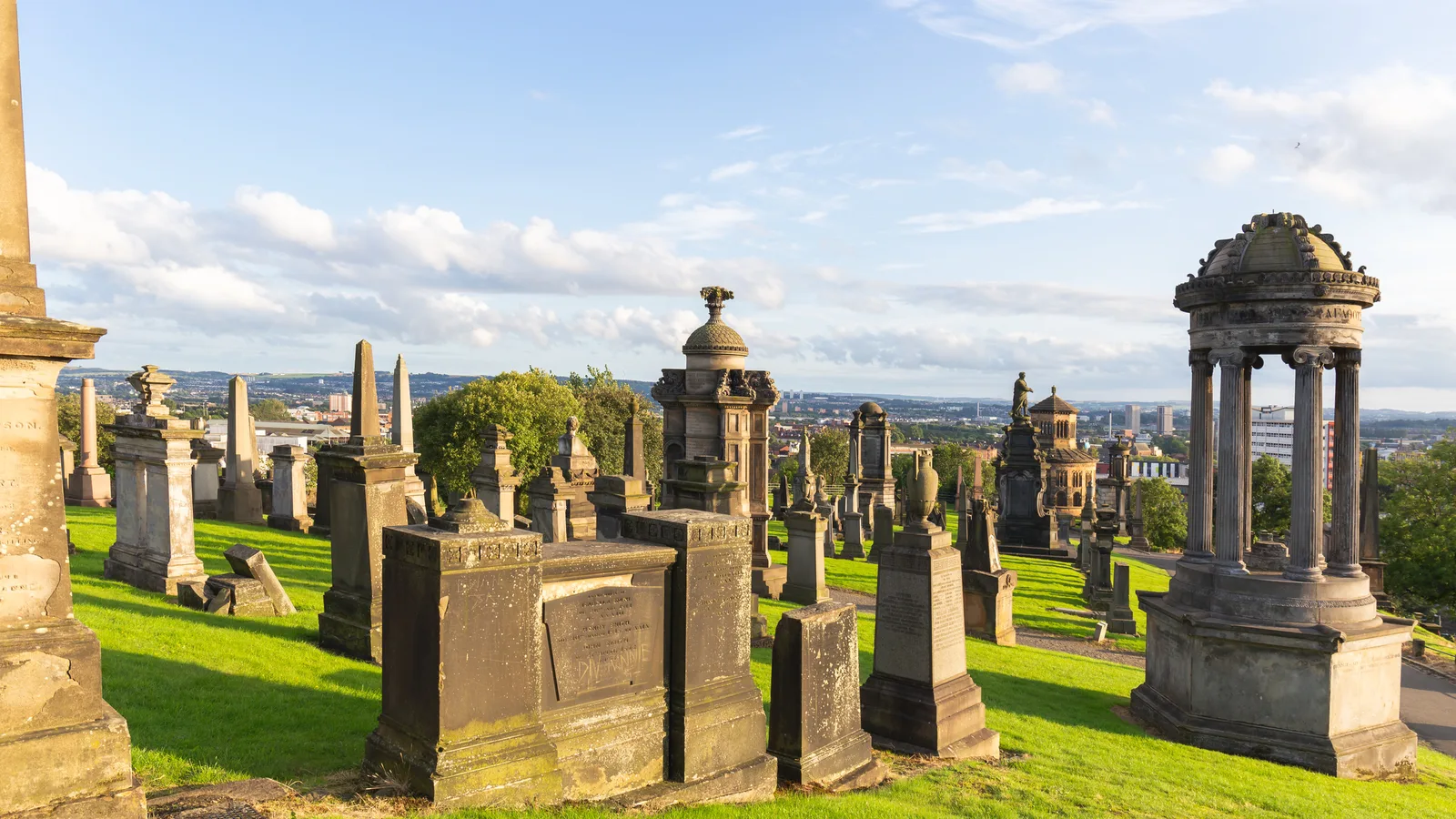
Then walk up into the Glasgow Necropolis, the Victorian garden cemetery that rises just east of the cathedral. It opened in 1833, part of a wave of new British cemeteries inspired by Père Lachaise in Paris, and around 3,500 monuments stand on the hill. Funeral processions once crossed David Hamilton's "Bridge of Sighs", completed in 1836. On the summit, a statue of John Knox on a Doric column predates the cemetery itself (it went up in 1825). Look out for the Andrew McCall tomb of 1888 with its Celtic cross by Charles Rennie Mackintosh. On a clear morning the city spreads out below you, which is reason enough to come up here first rather than last.
Into the centre: GoMA and the cone
Walk down through the Merchant City to Royal Exchange Square, home of the Gallery of Modern Art. GoMA opened in 1996 in a neoclassical building that began life in 1778 as the townhouse of William Cunninghame, a tobacco merchant whose wealth came from the triangular slave trade; later it was a bank and then the Royal Exchange. Outside, the Duke of Wellington statue wears the traffic cone that the authorities kept removing and Glaswegians kept putting back. For our money it is the best summary of Glasgow's humour you will find in bronze. George Square is a short walk away, where the City Chambers offer a free guided tour of their interiors.
Kelvingrove: the city's great free museum
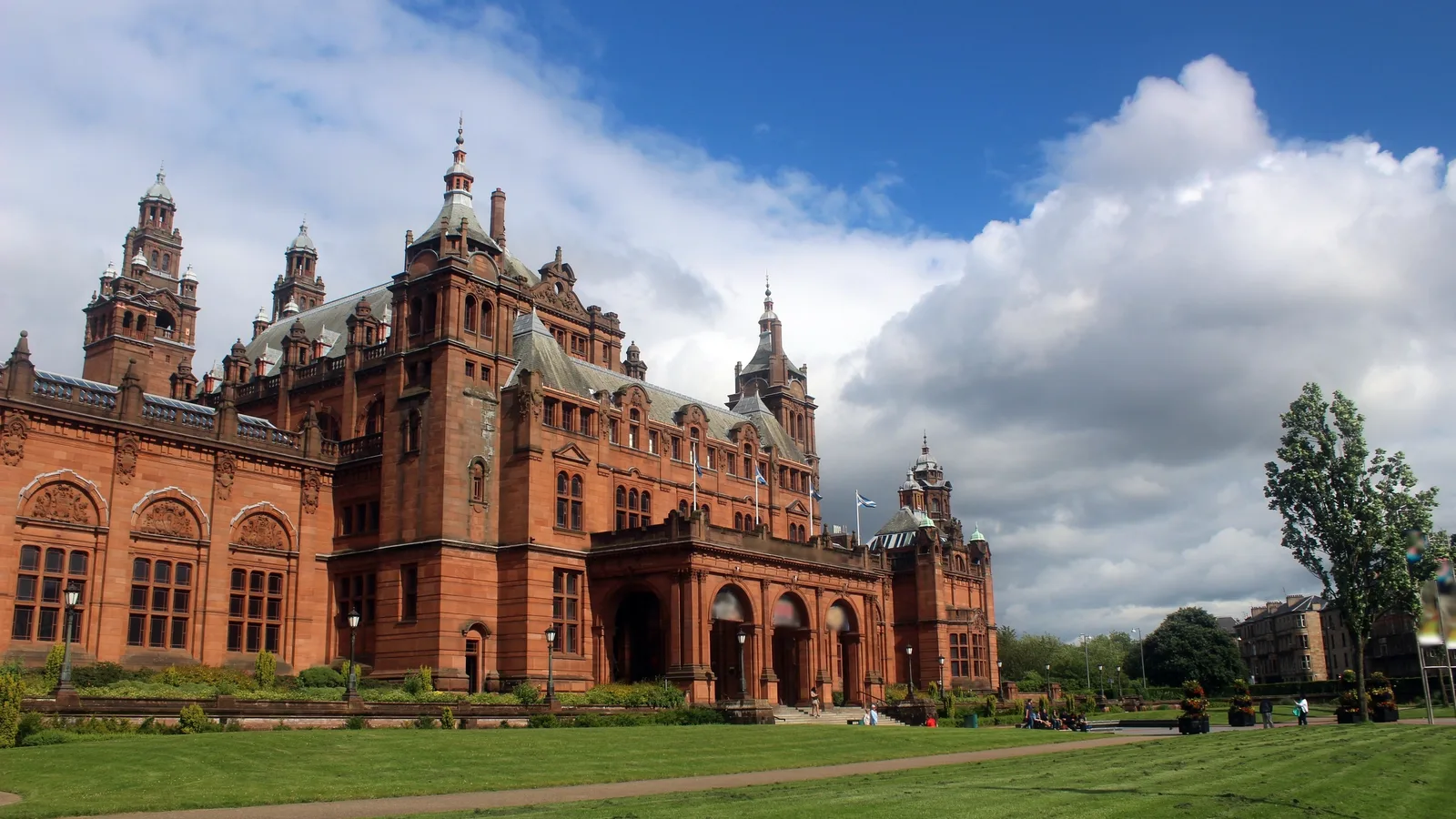
Head west for the heart of the day. Kelvingrove Art Gallery and Museum was built as the Palace of Fine Arts for the 1901 Glasgow International Exhibition and is one of Scotland's most popular free attractions. The building is enormous and gloriously mixed: paintings by the Glasgow Boys, Salvador Dalí's Christ of Saint John of the Cross, and in the Centre Hall a concert pipe organ built by Lewis & Co for that 1901 exhibition. Our advice is not to try to see everything. Pick two or three galleries, sit for ten minutes under the organ, and leave wanting more.
Afterwards, walk it off in Kelvingrove Park, which wraps around the museum. Kelvin Hall stands to the south, and the University of Glasgow rises to the north.
Up the hill, the University of Glasgow Bell Tower marks the Gilbert Scott building, home of the Hunterian Museum. It calls itself Scotland's oldest museum: it opened in 1807 after Dr William Hunter left his collections to the university, and moved here in 1870. Entry is free. It is small enough for an hour, with Roman material from the Antonine Wall, fossils and dinosaurs, Lord Kelvin's scientific instruments and a thoughtful display, Curating Discomfort, on how the collections are tied to empire. On the same campus, the Memorial Chapel is worth a look if it is open.
Back down the hill, Kelvin Hall is a partnership between Glasgow Life, the University and the National Library of Scotland, and houses the Hunterian's study and storage facilities.
Riverside: trams, trains and a tall ship
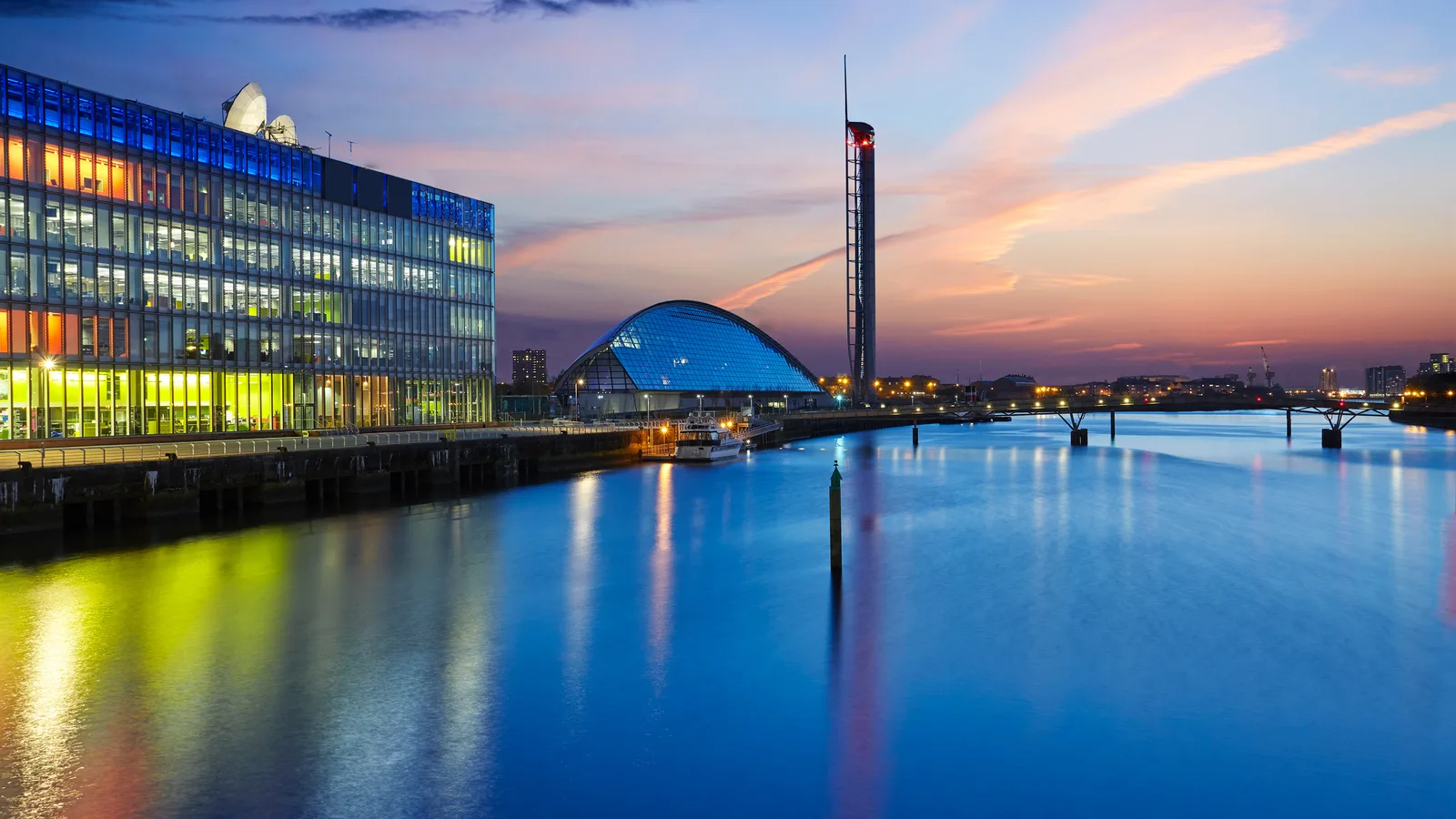
From the West End, make for the river and the Riverside Museum. Zaha Hadid Architects designed the zigzag building, which opened in 2011 and won the European Museum of the Year Award in 2013. Inside are about 3,000 objects: the oldest surviving pedal cycle, a huge collection of Scottish-built cars and trucks, a South African Railways steam locomotive, seven Glasgow trams and around 250 ship models in the Clyde Room. VisitGlasgow lists it among the city's free or low-cost attractions, and the tall ship Glenlee is often moored alongside. This is the stop for children. Plenty of adults come out of it with the same grin.
Our verdict: if you only have one day
Our pick, from morning to evening:
- Morning: Glasgow Cathedral, Provand's Lordship and the Necropolis, in that order.
- Late morning: walk down to GoMA and the Wellington statue.
- Afternoon: Kelvingrove, then the park and the Hunterian.
- Late afternoon: the Riverside Museum, before heading back east.
Save the Burrell Collection for a second day, because it deserves one. Sir William Burrell and Lady Burrell gave more than 9,000 objects to the city in 1944. The museum sits in Pollok Country Park and reopened in 2022 after a major refurbishment, and it was named Art Fund Museum of the Year in 2023. VisitGlasgow lists it with Kelvingrove among the city's free collections. Go on a fine day and leave time for the park.
Free green space between the galleries
When the rain lifts, the free parks are worth a detour. Glasgow Green in the East End is the city's oldest park. In the West End, the Botanic Gardens and the Kibble Palace glasshouse are an easy add-on after the Hunterian. On the Southside, the Hidden Gardens behind Tramway is a calm green space for an hour's sitting down.
Plan it
- Getting there: Glasgow is well served by rail from across Britain. In the city, the sights in this guide divide into an eastern cluster (cathedral, Necropolis, Merchant City) and a western one (Kelvingrove, university, Riverside). Walk within each cluster and take public transport between them. VisitGlasgow also points to the hop-on hop-off sightseeing bus and city e-bikes.
- Where to stay: A city-centre base keeps both clusters within reach. Our place pages include Motel One Glasgow and citizenM Glasgow.
- Best time to go: Any time of year. Most of these sights are indoors, which makes this a good plan for a wet weekend. Save the Necropolis and the parks for the brightest part of the day.
- Booking tips: The permanent collections at the city museums don't need tickets. Special exhibitions sometimes do, so check before you go. The cathedral offers optional time slots and audio guides, and the City Chambers tour has to be booked. Donations keep these places free, so leave a few pounds where you can.
Ready to go? Build a day-by-day plan for Glasgow.
Plan a trip to GlasgowPlaces in this guide
Frequently asked questions
- Which Glasgow museums are free?
- Kelvingrove Art Gallery and Museum, the Riverside Museum, the Burrell Collection, GoMA, the St Mungo Museum, Provand's Lordship and the Hunterian Museum are free to enter, and so is Glasgow Cathedral. Some special exhibitions charge.
- Can you see Glasgow's free museums in one day?
- You can see a good selection. Do the cathedral, Provand's Lordship and the Necropolis in the morning, GoMA around midday, and Kelvingrove, the Hunterian and the Riverside Museum in the afternoon. Save the Burrell for another day.
- Is the Riverside Museum good for children?
- Yes. VisitGlasgow describes it as ideal for families. The collection takes in trams, a steam locomotive, cars and ship models, and the tall ship Glenlee is often moored alongside.
Sources
- visitglasgow.com/inspire-me/glasgow-on-a-budget
- en.wikipedia.org/wiki/Kelvingrove_Art_Gallery_and_Museum
- en.wikipedia.org/wiki/Burrell_Collection
- en.wikipedia.org/wiki/Riverside_Museum
- glasgowlife.org.uk/museums/venues/provands-lordship
- en.wikipedia.org/wiki/Glasgow_Necropolis
- gla.ac.uk/hunterian/visit/our-venues/museum
- historicenvironment.scot/visit-a-place/places/glasgow-cathedral/history/
- gla.ac.uk/explore/civic/kelvinhalltransformingaglasgowlandmark/
- wikiwand.com/en/articles/Gallery_of_Modern_Art,_Glasgow
Related guides
Culture · Cambridge
Cambridge colleges and gardens: King's, the Backs and the Botanic
Fan vaulting, a river lined with college lawns, a free museum of world standing and 40 acres of botanic garden: how to spend a rewarding day or two in Cambridge.
5 min read
Culture · Cardiff
Cardiff and its castles: a Victorian fantasy, a red tower and a free museum
Two thousand years of history in the city centre, a fairytale castle above the Taff gorge and two of Wales's best free museums: our plan for Cardiff's castles and collections.
5 min read
Culture · Oxford
Oxford for first-timers: colleges, free museums and Port Meadow
The view of Radcliffe Square from St Mary's tower, lunch in the 1774 Covered Market, dinosaurs and the dodo for free, then a walk across Port Meadow to the Trout.
5 min read