Weekend
A Peak District weekend: Mam Tor, Dovedale, Chatsworth and caves
Two days, two landscapes: gritstone ridges and show caves around Castleton, then limestone dales and a ducal palace further south. Our plan for a weekend in Britain's first national park.
By VacationGuide Editors · · 5 min read
The Peak District was the first national park in the UK, designated on 17 April 1951, and it still feels like two places stitched together. To the north, east and west lies the Dark Peak, gritstone and shale moorland with heather and blanket bog. In the centre and south is the White Peak, carboniferous limestone cut into valleys and gorges, where most of the villages and farmland sit. A good weekend gives you a taste of both. Our plan puts Mam Tor and Castleton on day one and Dovedale and Chatsworth on day two, with an underground boat ride in between for good measure.
Day one, morning: Mam Tor and the Great Ridge
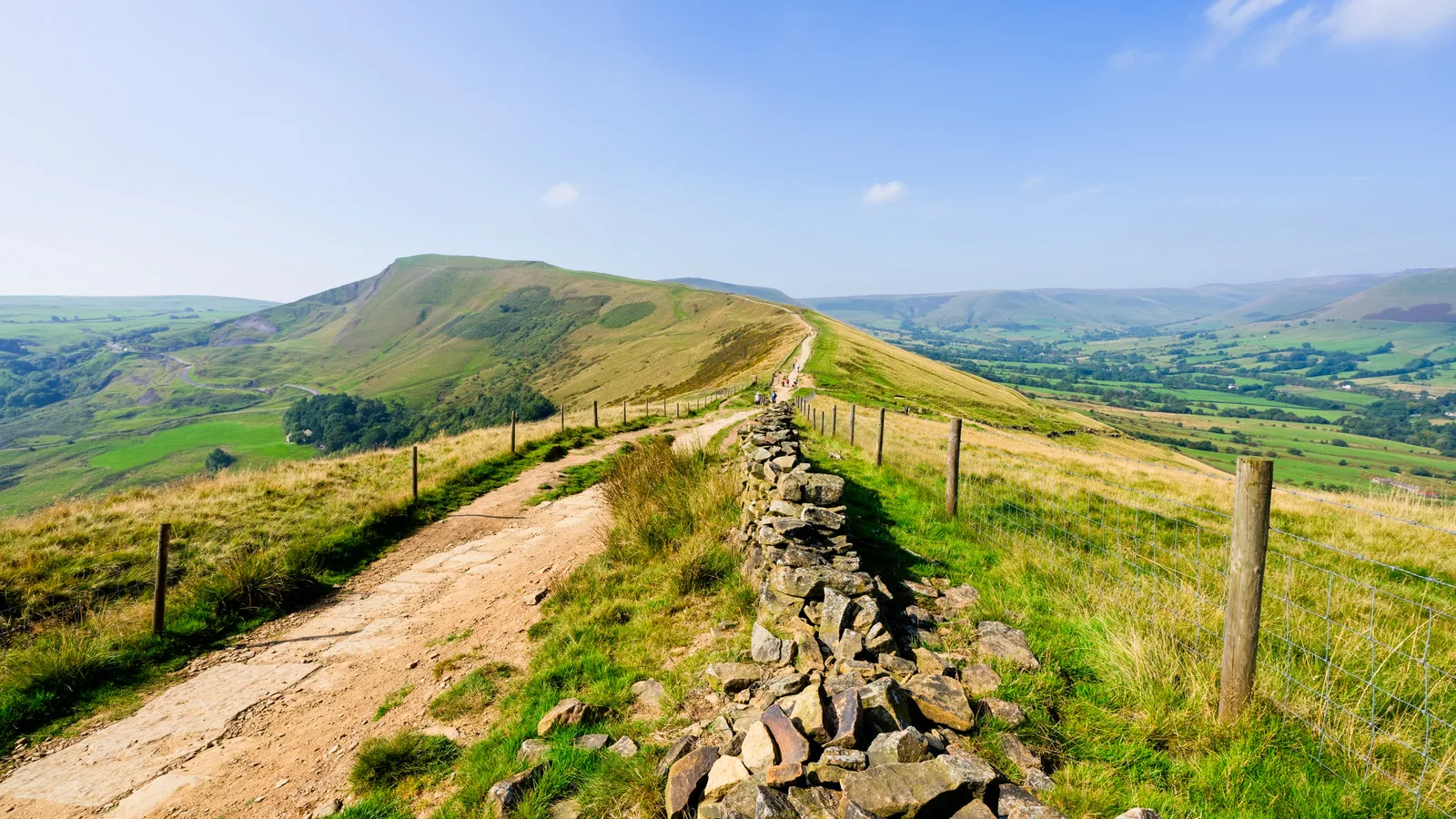
Mam Tor rises to 517 metres in the High Peak, and it earns its nickname, the Shivering Mountain, from the frequent landslips that keep reshaping it. The summit is ringed by a hill fort of the late Bronze Age and early Iron Age; radiocarbon dating suggests people were living here from around 1200 BC. Two Bronze Age burial mounds survive too, one of them now lying under the summit paving.
The hill links the eastern end of Rushup Edge with the western end of the Great Ridge, and walking the combined ridge is a popular outing. The ridge divides two valleys: the Hope Valley to the south and the Vale of Edale to the north. If you want something shorter, the National Trust's Mam Tor circular walk is about three miles and takes in some of the most dramatic scenery in the Edale Valley.
Don't miss the broken road. The old main road beneath Mam Tor was abandoned in 1977 after a landslip, and the Peak District National Park Authority describes a traffic-free route along it as the buckled road disappears below the hill. It is about 650 metres to the road end, steep, cambered and fissured in places, and a vivid lesson in why the hill shivers.
Our tip: start early. On a short day especially, you want the ridge in good light, and it leaves the afternoon free for Castleton.
Day one, afternoon: Castleton and Speedwell Cavern
Castleton sits at the head of the Hope Valley and grew after Peveril Castle was built above it in 1086. It became a lead mining, market and coaching village and is now a conservation area. The only western route into the village these days is Winnats Pass, a spectacular limestone gorge, because the 1977 landslip destroyed the old road beneath Mam Tor.
The village is known for its show caves, with guided tours of about 40 minutes:
- Speedwell Cavern: at the foot of Winnats Pass, this is an old lead mine. You descend 105 steps, then travel by boat through the flooded workings of a 200-year-old mine to a cavern holding the Bottomless Pit, a large underground lake.
- Treak Cliff Cavern: known for Blue John, a banded fluorspar found only in this area.
- Blue John Cavern: holds 8 of the 14 known veins of Blue John; its many steps may not suit everyone.
- Peak Cavern: where a large underground river system emerges, with a very large natural entrance.
Our pick if you only do one: Speedwell, because a boat ride underground is unlike anything else in the area, and it works in any weather.
Day two, morning: Dovedale stepping stones
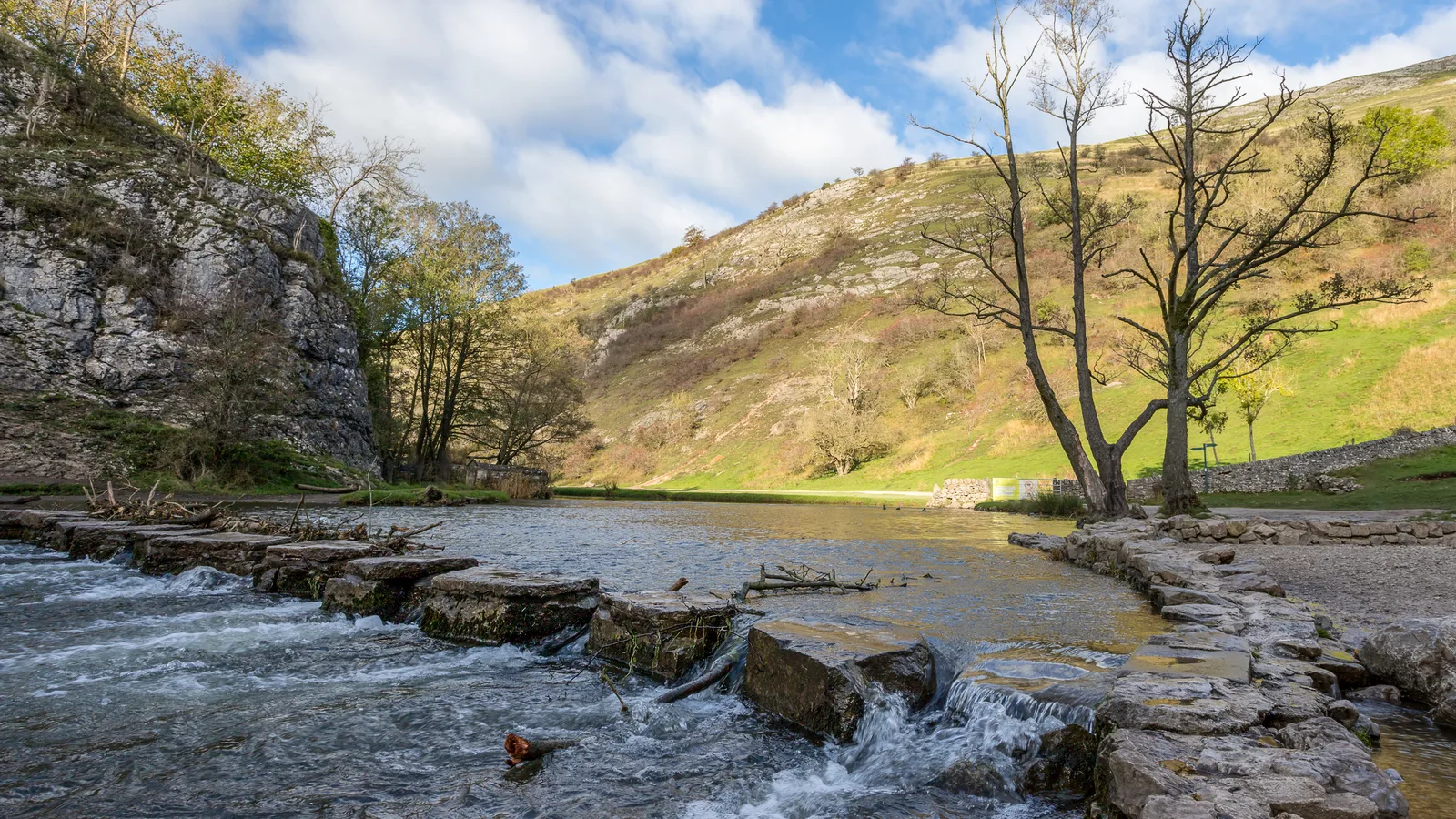
Head south into the White Peak and the landscape changes completely. The National Trust's trail from Ilam Park to the Dovedale Stepping Stones is about 1.5 miles (2.4km), roughly 40 minutes on foot. It is graded moderate: fields and slopes can be muddy and slippery, and it is not suitable for pushchairs.
Thorpe Cloud, an isolated flat-topped limestone hill on the Derbyshire–Staffordshire border, is in view most of the way. The River Dove marks that county boundary and supports fish, invertebrates and birds including dippers and herons. The stepping stones themselves were placed in the mid-19th century, and if you look closely you will see fossils in them.
Two warnings. After heavy rain the stones can flood and become impassable. And on weekends, bank holidays and school holidays the car parks can be full by 9am. Dogs must be on leads where there are grazing animals and throughout Dovedale National Nature Reserve.
Day two, afternoon: Chatsworth
Chatsworth House stands on the east bank of the River Derwent, about four miles north-east of Bakewell, and has belonged to the Cavendish family since 1549; it is the seat of the Duke of Devonshire.
Inside, the Painted Hall is the historic heart of the house, with Louis Laguerre's murals of scenes from the life of Julius Caesar. Outside, the garden is a layered story. Capability Brown reworked it in a naturalistic style for the 4th Duke and did much of the park's landscaping. Joseph Paxton, appointed head gardener in 1826, became the most influential designer of its Victorian features. Look for the Cascade, a flight of stone steps with water flowing down them, built in 1696 and rebuilt in 1701, and the Emperor Fountain, built in the 1840s for an expected visit by Tsar Nicholas I, who died without seeing it. It usually runs at about half its full height because of limited water supply.
If you only have one day
Choose a side. For walking and drama, do Mam Tor in the morning and Speedwell Cavern in the afternoon, with lunch in Castleton. For a gentler, more varied day, walk to the Dovedale stepping stones early, then drive to Chatsworth for the afternoon.
Our verdict
The Peak District rewards people who plan around crowds and weather. The headline sights are popular for good reason, and an early start makes the difference at places like Dovedale, where parking fills fast. Pack for mud, even in summer, and don't try to cram all four places into one day: the dark gritstone north and the pale limestone south deserve a day each.
Plan it
- Getting there: The Hope Valley Line runs between Sheffield and Manchester Piccadilly, stopping at Edale, Hope and Hathersage. Edale is also the southern start of the Pennine Way and a natural base for the Mam Tor ridge.
- Where to base yourself: The Hope Valley (Castleton, Hope or Edale) for day one; Bakewell, about four miles from Chatsworth, works well for day two.
- Best time of year: Spring to autumn for walking. In wet spells, remember the Dovedale stones can flood, and check conditions before heading onto exposed ridges in winter.
- Booking tips: Arrive early at Dovedale and Ilam on weekends and holidays. Ilam Park car park is open dawn to dusk with no overnight parking. Check Chatsworth and the Castleton caves for tickets and seasonal opening before you travel.
Ready to go? Build a day-by-day plan for the Peak District.
Plan a trip to the Peak DistrictPlaces in this guide
Frequently asked questions
- How long is the walk to the Dovedale stepping stones?
- The National Trust trail from Ilam Park is about 1.5 miles (2.4km) and takes around 40 minutes. It is graded moderate and not suitable for pushchairs, and the stones can flood after heavy rain.
- How high is Mam Tor?
- Mam Tor is 517 metres high. Its summit is ringed by a late Bronze Age and early Iron Age hill fort, and its landslips give it the nickname the Shivering Mountain.
- What is Speedwell Cavern?
- An old lead mine at the foot of Winnats Pass near Castleton. Visitors descend 105 steps and travel by boat through flooded workings to a cavern holding the Bottomless Pit.
Sources
- en.wikipedia.org/wiki/Peak_District
- en.wikipedia.org/wiki/Mam_Tor
- nationaltrust.org.uk/features/mam-tor-peak-district
- peakdistrict.gov.uk/visiting/miles-without-stiles/mam-tor-landslip
- peakdistrict.gov.uk/visiting/visitor-centres/castleton/castleton-things-to-do
- visitpeakdistrict.com/business-directory/speedwell-cavern
- nationaltrust.org.uk/visit/peak-district-derbyshire/ilam-park-dovedale-and-the-white-peak/ilam-park-to-dovedale-stepping-stones-trail
- en.wikipedia.org/wiki/Chatsworth_House
Related guides
Weekend · Belfast
Belfast and the Causeway Coast: Titanic, markets and basalt columns
Two days in the city, from the shipyard where Titanic was built to St George's Victorian market hall and the free Ulster Museum, then a train and bus to the Giant's Causeway.
5 min read
Weekend · Bristol
A Bristol weekend: Brunel's ship, the harbourside, Banksy and the gorge
A weekend in Bristol built around the water: Brunel's iron ship in her dry dock, a free museum of the city, Banksy on the walls and a bridge 101 metres above the Avon.
5 min read
Weekend · St Andrews
St Andrews beyond the golf: a long weekend of ruins, quads and beaches
Skip the tee times. Our long weekend in St Andrews takes in a clifftop castle, Scotland's largest medieval church, Scotland's oldest university and two very different beaches.
6 min read