Walking
Hadrian's Wall for first-timers: Housesteads, the crags and the AD122
The central section in Northumberland is the Wall at its wildest. Start at Housesteads, walk the crags and let the AD122 bus do the rest. No car is needed.
By VacationGuide Editors · · 5 min read
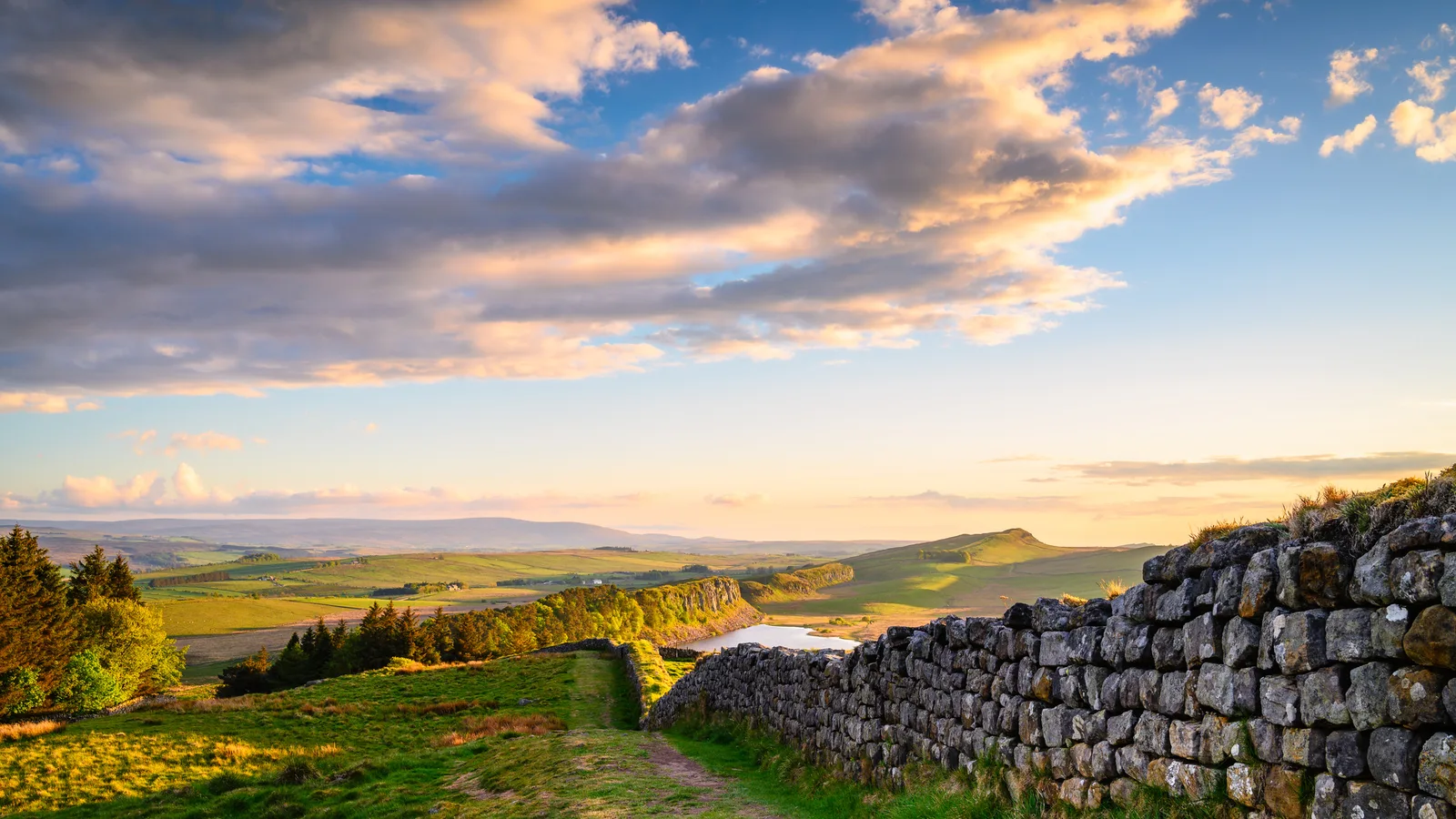
Most people picture the same stretch of Hadrian's Wall: grey stone riding the crest of a crag, falling into a dip and climbing out the other side, with a lake shining below and nothing but sheep for miles. That stretch is real. It is the central section in Northumberland, and it is the best place for a first visit. This guide covers how to see it without a car, where to walk, and why Housesteads should come first.
Why the central section?
The Wall runs coast to coast, and so does the 84-mile Hadrian's Wall Path National Trail, from Wallsend in the east to Bowness-on-Solway in the west. Not every mile looks the way you imagine, though. The National Trail notes that the highest and wildest part, with the most visible Wall and several forts, lies between Chollerford and Walton. The Wall follows the Whin Sill, a long ridge of hard volcanic rock. The crags give it the line you have seen on postcards, and they give you wide views north into empty country.
If you have a day or two, stay here. You won't feel short-changed.
Housesteads: the fort to see first
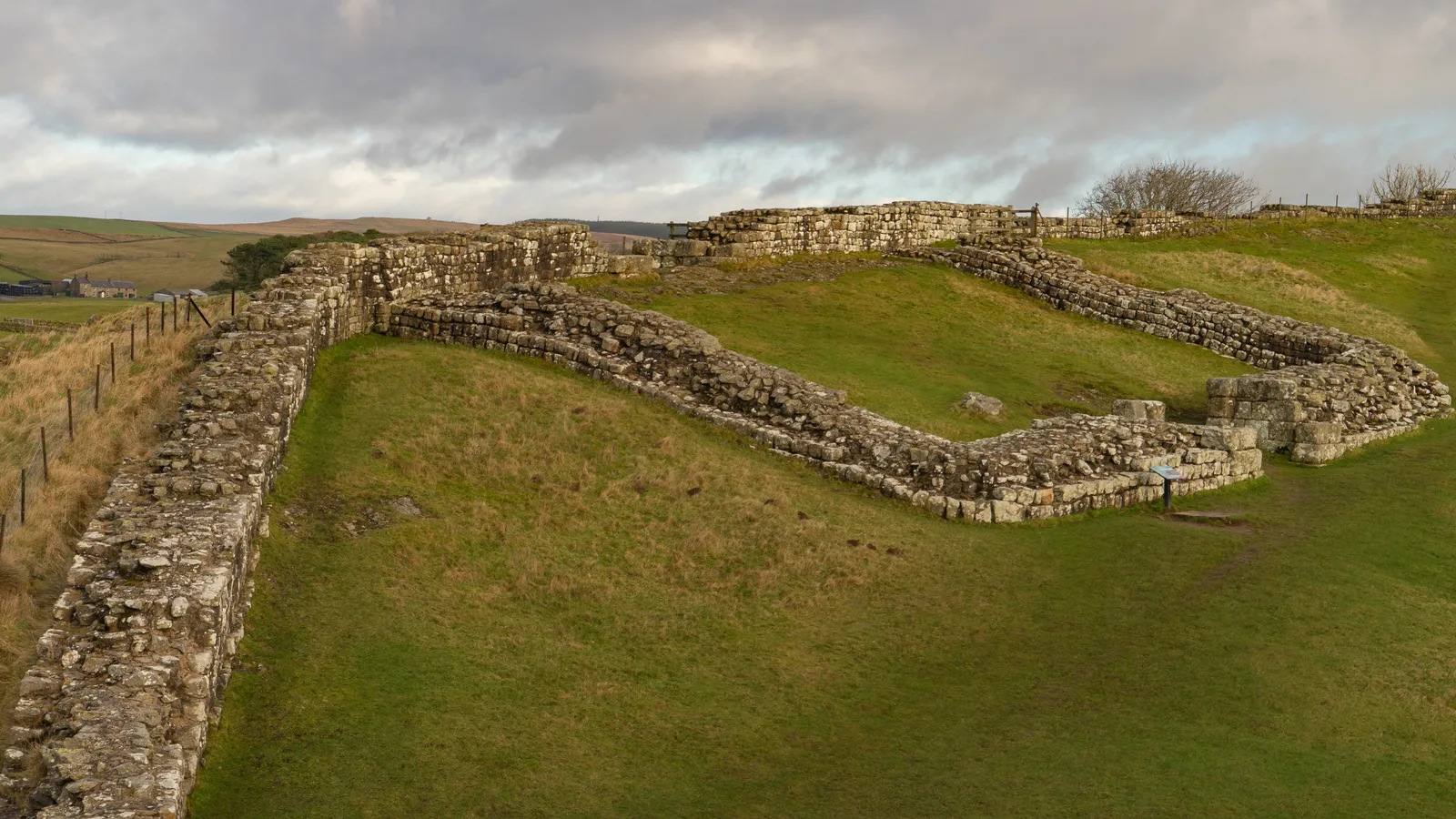
Hadrian's Wall at Housesteads is the Roman fort of Vercovicium, built in stone around AD 124, a couple of years after work began on the Wall. It held a garrison of around 1,000 men. English Heritage manages the fort. The National Trust owns the land around it, including the Victorian farmhouse, which also goes by the name Housesteads.
What makes it the first-timer's fort is how clearly you can read it. You walk among the remains of the fort, its hospital and some of the best-preserved stone latrines in Roman Britain. Every child will want to see those. The museum shows altars, jewellery, tools and weapons, a reconstruction of the buildings and a model of how the fort looked at its height. Expect a short uphill walk on a grass path from the visitor centre and car park to the museum and fort. Wear proper shoes.
The fort's north wall is the Wall itself, so from Housesteads you can walk straight onto the trail. A short wooded stretch here, about 150 metres on the Whin Sill, is the one place where the National Trail lets you choose to walk on top of the Wall. Everywhere else, keep off it.
The classic walk: along the crags
From Housesteads the path heads west along the crags past Crag Lough, through some of the most photographed miles in England, towards Steel Rigg. It is not a long walk, but it is a steep one. The path keeps dropping into the gaps between crags and climbing out again, so allow longer than the distance suggests.
You will pass Sycamore Gap. The famous tree that stood there for nearly 200 years was felled overnight on 27 September 2023, in what the National Trust called an act of vandalism. The Trust removed it in sections and kept it while its future was decided. The gap is still a fine place to stop, and a strange one now.
Some practical points, all from the National Trail and its partners:
- Walk between May and October if you can. The National Trail recommends these months for the Path, partly to protect the ancient monument, whose turf suffers when it is wet.
- Follow the "Every Footstep Counts" code, which asks walkers to help look after the Wall and the Trail for future generations. Stay off the Wall except where the Trail allows it.
- Collect stamps. From 1 May to 31 October, walkers can collect passport stamps at seven stations, including Housesteads and Chesters.
Getting about without a car: the AD122
The bus is named after the year the Wall was begun. The AD122 Hadrian's Wall Country Bus links Hexham and Haltwhistle and stops at the places first-timers want, including Chesters Roman Fort, Housesteads, Vindolanda, The Sill, the Roman Army Museum and Walltown. Go North East currently describes it as running daily, all year. Hexham and Haltwhistle both have railway stations on the line between Newcastle and Carlisle, so you can travel the whole way by public transport.
Ticket types include singles, a day ticket and a family day ticket, and older and disabled people's bus pass holders travel free (older people's passes have time restrictions). Check the current timetable before you plan the day.
The bus also lets you walk one way and ride back, which is how we would do the crags. Take the AD122 to Housesteads, walk west along the Wall to Steel Rigg, drop down to The Sill and catch the bus back.
Our verdict: if you only have one day
- Morning: Housesteads fort and museum, and be there early.
- Midday: walk west along the crags past Crag Lough and Sycamore Gap.
- Afternoon: come down to The Sill for its free landscape exhibition, green roof and café.
- If you have energy left: take the bus on to Vindolanda.
With a second day, give Vindolanda and the Roman Army Museum a morning. Vindolanda is run by the Vindolanda Charitable Trust and has nine forts built one on top of another. It is known above all for the Vindolanda writing tablets, postcard-sized wooden letters that record ordinary Roman life, from supply lists to a birthday party invitation. Excavations usually take place on weekdays from April to September, weather permitting, and you can watch them.
The Sill gets less attention than it should. It is the National Landscape Discovery Centre at Once Brewed, in Northumberland National Park, and it is free to enter. It has a landscape exhibition, a café with wide views, a gift shop, and a fully accessible green roof and viewing platform. The building won a 2019 award for universal design. On a wet day it is the natural place to wait out the weather.
Add the coast
Northumberland's coast is a different holiday, and a good second half to a week. Once you have walked the Wall, head north-east for Bamburgh Castle on its rock, boat trips to the Farne Islands and Lindisfarne (Holy Island). Holy Island is reached by a tidal causeway. Northumberland County Council publishes safe crossing times, and you should check them every time before you set out.
Plan it
- Getting there: Travel by rail to Hexham or Haltwhistle on the line between Newcastle and Carlisle, then use the AD122 bus to reach the forts and The Sill.
- Where to base yourself: Hexham and Haltwhistle are the obvious public-transport bases because the AD122 starts and ends there. Walkers may prefer to stay close to the central section, near Once Brewed.
- Best time of year: May to October for walking. The National Trail recommends these months for the Path, and passport stamping runs from 1 May to 31 October. Winds are generally lightest from June to September.
- Booking tips: Check opening times for Housesteads, Vindolanda and The Sill before you travel, because they change by season. If you plan to cross to Lindisfarne, check the safe crossing times first.
Ready to go? Build a day-by-day plan for Northumberland.
Plan a trip to NorthumberlandPlaces in this guide
Frequently asked questions
- What is the best part of Hadrian's Wall for a first visit?
- The central section in Northumberland. The National Trail describes the stretch between Chollerford and Walton as the highest and wildest part, with the most Wall to see and several Roman forts, Housesteads among them.
- Can you visit Hadrian's Wall without a car?
- Yes. Take the train to Hexham or Haltwhistle, then the AD122 Hadrian's Wall Country Bus, which stops at Chesters, Housesteads, Vindolanda, The Sill, the Roman Army Museum and Walltown. Check the current timetable before you go.
- Can you walk on top of Hadrian's Wall?
- Generally no. For conservation reasons the National Trail doesn't follow the top of the Wall. The exception is a short wooded stretch near Housesteads where walkers may choose to walk on it.
Sources
- gonortheast.co.uk/ad122
- newsroom.gonortheast.co.uk/news/a-service-fit-for-a-caesar-go-north-easts-ad122-bus-resumes-roman-heritage-route-to-widespread-popularity-238301
- historyhit.com/locations/housesteads-roman-fort
- visithadrianswall.co.uk/things-to-do/housesteads-roman-fort-p721991
- en.wikipedia.org/wiki/Hadrian%27s_Wall_Path
- visithadrianswall.co.uk/things-to-do/walking/hadrians-wall-path-national-trail
- nationaltrust.org.uk/services/media/statement-on-the-felling-of-the-sycamore-gap-tree
- hadrianswallcountry.co.uk/attraction/the-sill-national-landscape-discovery-centre/
- hadrianswallcountry.co.uk/visit/roman-vindolanda
- holyislandcrossingtimes.northumberland.gov.uk
Related guides
Coast · Northumberland
Northumberland's castle coast: Bamburgh, Holy Island and the Farnes
A short stretch of Northumberland coast holds a royal fortress, a tidal island where English Christianity took root and a seabird colony reached by boat from Seahouses.
5 min read
Walking · Eryri (Snowdonia)
Climbing Yr Wyddfa: which Snowdon path to choose, and how to stay safe
Six main paths, one rack railway and a summit that gets more than five metres of rain a year. How to pick your route up Yr Wyddfa, plus two easy add-ons: Swallow Falls and Harlech.
5 min read
Walking · The Lake District
Your first fells in the Lake District
Six summits to build confidence, in the order we'd walk them.
8 min read