Coast
Northumberland's castle coast: Bamburgh, Holy Island and the Farnes
A short stretch of Northumberland coast holds a royal fortress, a tidal island where English Christianity took root and a seabird colony reached by boat from Seahouses.
By VacationGuide Editors · · 5 min read
Few stretches of British coast pack as much into so few miles as north Northumberland. Within a short drive you have a fortress on a volcanic crag, a tidal island that is cut off twice a day by the sea, and an archipelago where tens of thousands of puffins nest each summer. The trick is timing: the tide decides when you can reach Holy Island, the season decides if you can land on the Farnes, and the weather has a say in almost everything else. Here is how we would put it together.
Bamburgh: the castle that set the bar
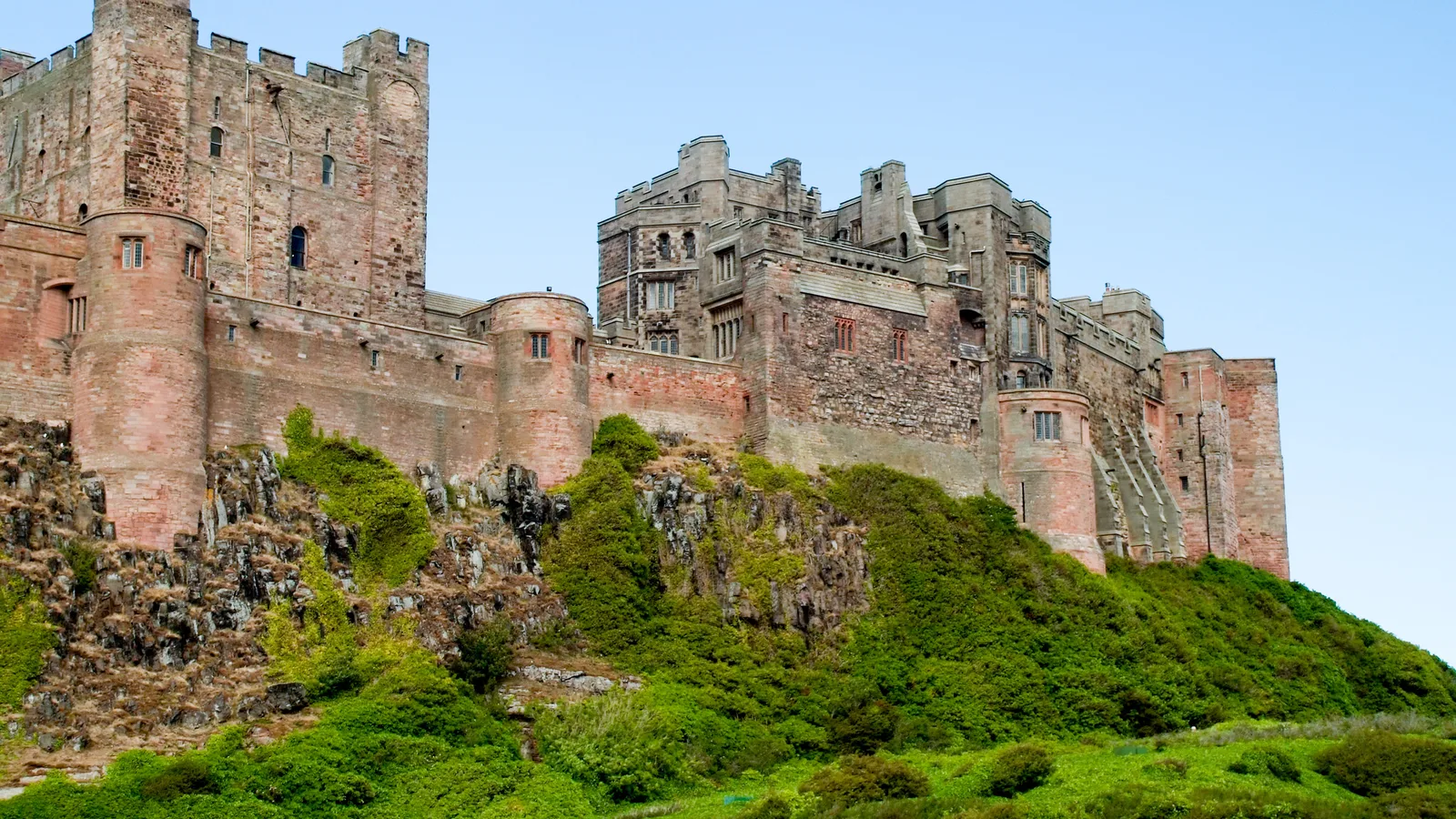
Bamburgh Castle stands on a crag of volcanic dolerite, part of the Whin Sill, and the site has been fortified for a very long time. A Celtic Brittonic fort known as Din Guarie stood here, and it may have been the capital of the kingdom of Bernicia between about 420 and 547. During the Wars of the Roses, a nine-month siege in 1464 involved extensive use of artillery, and Bamburgh became the first British castle to be taken by gunfire.
What you see today owes a great deal to the industrialist William Armstrong, who bought the castle in 1894; the restoration was completed in 1905. It remains in the Armstrong family's ownership, is Grade I listed and is open to the public.
Our verdict: even if you skip the interiors, go down to the beach below. Seeing the walls rise straight out of the rock from sea level is the image most people carry home from this coast.
Holy Island: let the tide set the timetable
Lindisfarne (Holy Island) is reached by a causeway that is cut off twice a day by fast incoming tides. Northumberland County Council publishes safe crossing times, and you should treat them as non-negotiable. The council advises allowing an extra 30 minutes because wind and other local conditions can change them, and notes that the times are offered in good faith.
There is also a marked walking route across the sands and mud, but the published times do not apply to it. The advice is clear: walk it in daylight with someone who knows the area, never on a rising tide, and aim to finish before the midpoint of the safe-to-cross period.
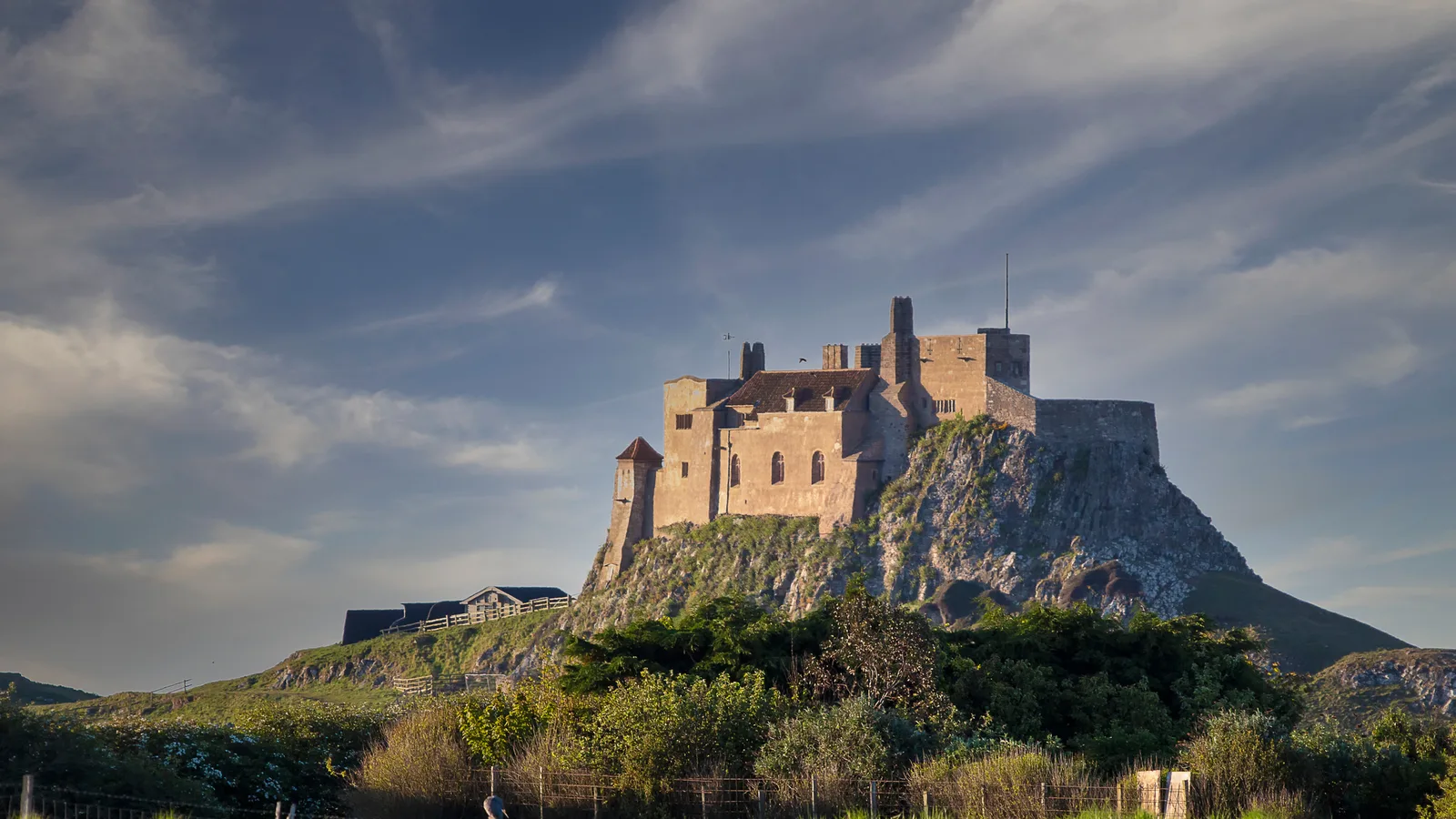
Once across, the island's story is one of the most important in English Christianity. In 635 King Oswald of Northumbria invited Aidan, an Irish monk from Iona, to be bishop of his kingdom and gave him the island for a monastery. St Cuthbert later became prior and then bishop; when his tomb was opened in 698 his body was found uncorrupted, and Lindisfarne became a major pilgrimage site. The Lindisfarne Gospels were probably made here around 710–25 and are now in the British Library. The Viking raid of 793 shocked Europe, and the monks finally left in 875, carrying Cuthbert's coffin with them.
The ruins you visit are of the later priory, re-established by monks from Durham after the Norman Conquest. Look for the 12th-century "rainbow arch" spanning the church crossing. The priory was closed in 1537 under Henry VIII.
Lindisfarne Castle, meanwhile, began as a Tudor fort and was converted into a holiday home in 1903 by Edwin Lutyens for Edward Hudson.
The Farne Islands: boats, birds and seals
The Farne Islands are a 28-island archipelago cared for by the National Trust since 1925. You can only reach them by booking a boat from Seahouses harbour with one of the boat operators, and the Trust recommends booking in advance.
- Landings: Inner Farne opens for landings from April to September. The islands are closed for the rest of 2026 and reopen on 1 April 2027.
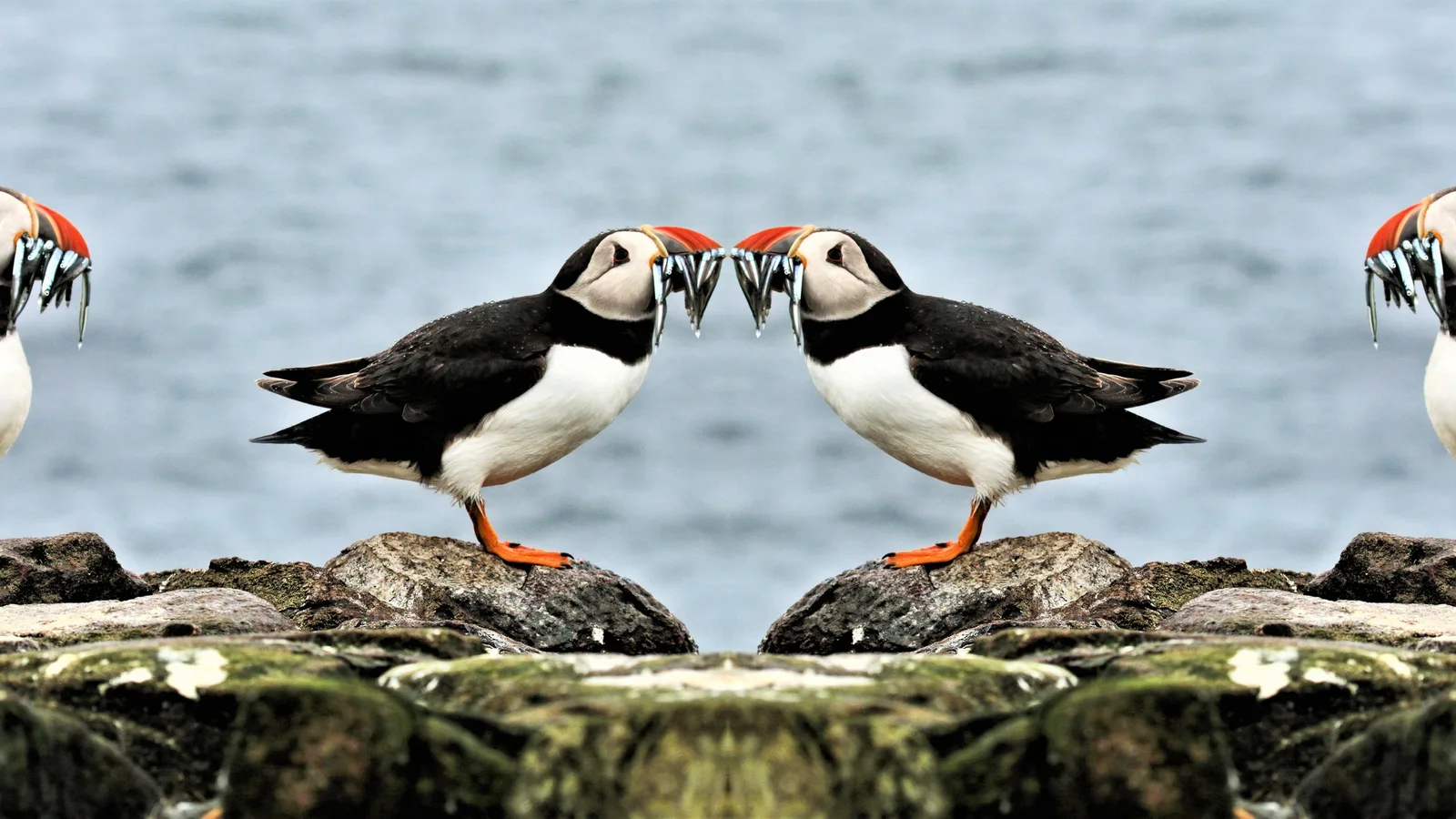
- Seabirds: In early summer around 200,000 breeding seabirds gather, including roughly 43,000 pairs of puffins. The birds are present from May to July; most leave by the end of July, though puffins are sometimes still seen in early August.
- Seals: The islands are home to a large Atlantic grey seal colony, and sail-around trips let you see the islands from the water.
- On the island: A boardwalk circles Inner Farne. There is no shop, toilets are limited, and dogs, including assistance dogs, are not allowed.
St Cuthbert spent his last years as a hermit on Inner Farne, and St Cuthbert's Chapel there has 17th-century woodcarving and stained glass. National Trust members land free but still pay for the boat. Landings can be cancelled at short notice because of weather or sea conditions, so build in a spare day if the Farnes are the point of your trip.
Our advice: if puffins are the goal, aim for June, safely inside the May-to-July window. Outside the breeding season, a sail-around trip is still worth it for the seals and the sense of scale.
Seahouses: the harbour that turned to tourism
Seahouses grew up as the seaward end of North Sunderland. Its harbour was built by Lord Crewe's trustees and opened on 25 June 1889; it shipped lime and grain, and herring fishing and curing became central to village life, with summer boats arriving from as far as the Hebrides, Shetland and Cornwall. As fishing declined in the late 20th century, many boats switched to trips to the Farnes. Today it is the practical base for the islands, with boat booking huts at the harbour and pay-and-display parking opposite.
If you only have one day
- Morning: Check the tide table. If the causeway is open early, cross to Holy Island first and see the priory.
- Midday: Drive south to Seahouses for a Farnes boat (in season) or a sail-around trip.
- Late afternoon: Bamburgh Castle and a walk on the beach below it.
Flip the order if the tide demands it. On this coast, the sea sets the itinerary, not you.
Further inland
If you have an extra day, the Roman frontier is within reach. Hadrian's Wall at Housesteads makes a dramatic contrast with the coast: moorland instead of sand, and a different empire's idea of a border.
Plan it
- Getting there: The X18 bus (Newcastle to Berwick, calling at Alnmouth station) and the 418 (Alnwick to Berwick) serve the coast. Chathill station is about four miles from Seahouses but has no Sunday trains, so you may need a bus or taxi from Alnmouth or Berwick.
- Where to base yourself: Seahouses or Bamburgh put you between the Farnes and Holy Island; both make sense for a two- or three-night stay.
- Best time of year: May to July for seabirds; Inner Farne landings run April to September. Outside that window the castles and Holy Island remain the draw.
- Booking tips: Book Farnes boats ahead in summer and allow extra time to park, as Seahouses car parks get busy. Check Holy Island safe crossing times on the council website before you set out, and allow 30 minutes extra.
Ready to go? Build a day-by-day plan for Northumberland.
Plan a trip to NorthumberlandPlaces in this guide
Frequently asked questions
- When is it safe to cross to Holy Island?
- Only within the safe crossing times published by Northumberland County Council. Allow an extra 30 minutes because wind and local conditions can change them, and remember the times do not apply to the walking route across the sands.
- When can you see puffins on the Farne Islands?
- The seabirds are on the islands from May to July. Most leave by the end of July, though puffins are sometimes still seen in early August. Inner Farne landings run from April to September.
- How do you get to the Farne Islands?
- By boat from Seahouses harbour with one of the boat operators. Book in advance; landings can be cancelled at short notice for weather. National Trust members land free but still pay the boat fare.
Sources
- en.wikipedia.org/wiki/Bamburgh_Castle
- holyislandcrossingtimes.northumberland.gov.uk
- visitnorthumberland.com/coast/holy-island/crossing-times
- english-heritage.org.uk/visit/places/lindisfarne-priory/history/
- nationaltrust.org.uk/visit/north-east/farne-islands/index
- nationaltrust.org.uk/who-we-are/news/farne-islands-reopens
- communities.northumberland.gov.uk/Seahouses.htm
Related guides
Walking · Northumberland
Hadrian's Wall for first-timers: Housesteads, the crags and the AD122
The central section in Northumberland is the Wall at its wildest. Start at Housesteads, walk the crags and let the AD122 bus do the rest. No car is needed.
5 min read
Coast · The East Neuk of Fife
Harbour-hopping the East Neuk: Crail to Elie on the Fife Coastal Path
Five fishing villages, one stretch of coast path, a lot of salt air and fish suppers. How to walk, bus and eat your way along Fife's eastern corner from Crail to Elie.
6 min read
Coast · Pembrokeshire
Pembrokeshire's coast: Barafundle, St Davids, Skomer and the coast path
A long weekend or a week on Wales's far western coast: the walk-in beach at Barafundle, Skomer's puffins, Britain's smallest city and the 186-mile coast path.
5 min read