Itinerary
York in two days: the walls, the Minster, the Shambles and the trains
Two miles of medieval wall, the country's largest expanse of stained glass, a street of overhanging timber and a free museum full of locomotives. Our two-day plan for York.
By VacationGuide Editors · · 5 min read
York rewards slow walking. The centre is compact, but it is layered so thickly – Roman fort, medieval city, railway hub – that you could spend a week peeling it back. Two days is our recommended minimum: one for the walls and the Minster, one for the Shambles and the trains. Here's how to spend them, and what to book before you go.
Day one, morning: walk the walls
Start high. The York City Walls run for about 2.1 miles and are the longest town walls in England. The Romans began the circuit around AD 71 with a fort of about 50 acres; little of the surviving stonework is Roman, but the line of the defences has shaped the city ever since.
The walk is free, and the council opens the gates every morning and closes them at dusk, working round from Fishergate Postern; closing time moves through the year with the light. The walkway is elevated and closes in ice, snow and high winds, and on Christmas Day – in winter it can stay shut all day if the sun is too low to melt the ice.
Look out for the four main gateways, or "bars". Bootham Bar has some of the oldest surviving stonework, from the 11th century. Monk Bar, built in the early 14th century, is the tallest and still has a working portcullis. Walmgate Bar keeps the only surviving barbican on a town gate in England. Micklegate Bar was the traditional ceremonial entrance for monarchs, and its upper floors now hold a small museum. Along the way you'll pass the Robin Hood Tower, which despite its name was built in 1889 during the Victorian restoration. You'll also notice a gap beyond Layerthorpe Bridge: no wall was ever built there because the King's Fishpool, a swamp, did the job instead.
Finish at Museum Gardens, home to the ten-sided Multangular Tower, the most noticeable intact Roman structure in the walls, probably added around AD 310–320. The ruins of St Mary's Abbey are in the same gardens.
Day one, afternoon: York Minster
Christianity has been centred on this site in the north of England since the 7th century, and York Minster is the result of centuries of building on it. Three things deserve your time.
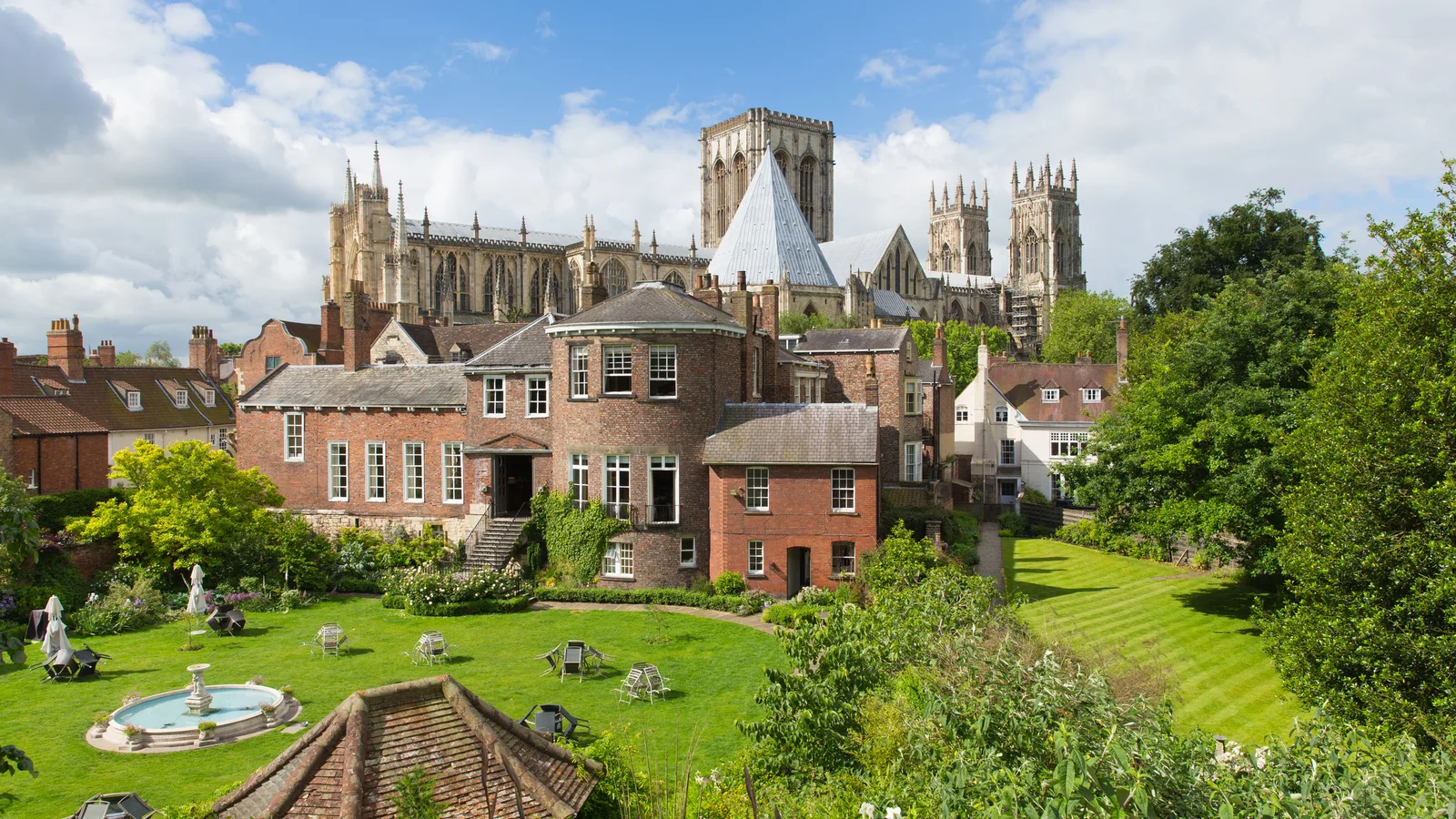
- The Great East Window, which Visit York describes as the single largest expanse of stained glass in the country.
- The Chapter House, an octagonal space from the 1280s whose vaulted ceiling is held up without a central column.
- The Undercroft Museum, included with a sightseeing ticket, which digs down through the layers beneath the cathedral, from Roman barracks to an Anglo-Saxon cemetery.
If your legs survived the walls, the Tower Challenge takes you up 275 medieval steps to the highest point in York. It costs extra and tickets are limited, so pre-book.
Our tip: stay for Choral Evensong, sung by the Choir of York Minster from Tuesday to Sunday during term time. It's the Minster doing what it was built for.
Day two, morning: the Shambles and the market
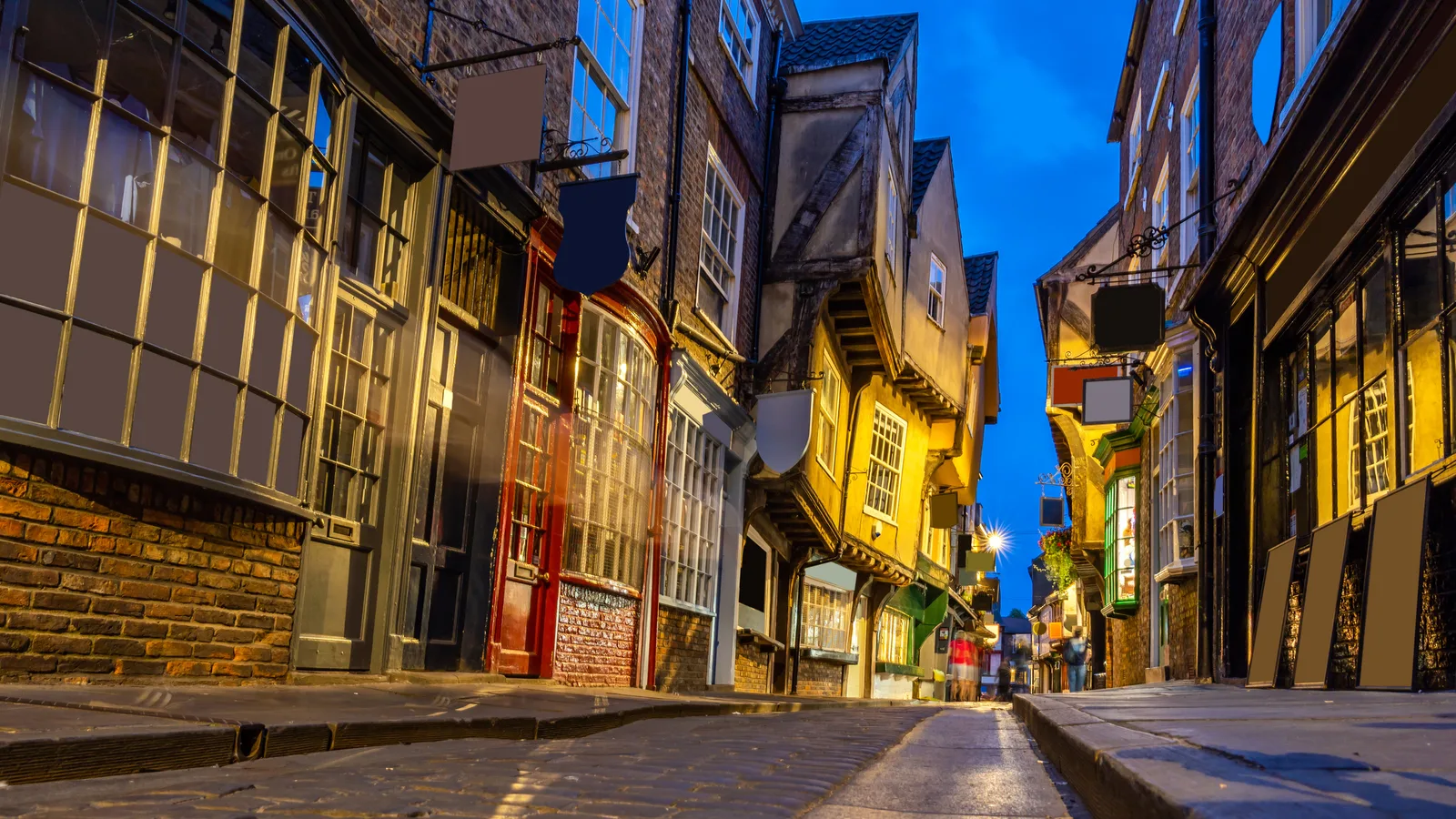
Get to the Shambles early, before the crowds. Many of its timber-framed buildings date from the 14th century, their upper floors jutting out over the narrow street. This was York's butchers' street for centuries – there were 31 butchers' shops here in 1885 – and some shopfronts still have meat hooks outside and display shelves below them.
The street is old even by York standards. It isn't named in the Domesday survey of 1086, but an entry listing two butchers' stalls near St Crux is believed to refer to it – so the trade here may go back more than nine centuries.
Two more details are easy to miss. A shrine at number 35 honours St Margaret Clitherow, the butcher's wife who is thought to have lived at number 10. And five snickelways – York's word for its narrow lanes – lead off the street to Shambles Market, an open market space that was called Newgate Market until 2015.
You'll also see the wizard-themed shops that have opened here since 2017. The street is one of several claimed as the inspiration for Diagon Alley, though J.K. Rowling has said she never visited.
Day two, afternoon: the National Railway Museum
End with the trains. The National Railway Museum opened in 1975 on the site of a former locomotive depot and has been free to enter since 2001. It's on Leeman Road, within walking distance of the station.
In the Great Hall you'll find the streamlined LNER A4 Mallard, a statue of George Stephenson and a segment of the Channel Tunnel. Look for the Japanese 0 Series Shinkansen, donated in 2001 and one of only two Shinkansen vehicles on show outside Japan. Station Hall, a Grade II listed former goods station, reopened in 2025 after an £11 million refurbishment; its "Palaces on Wheels" display shows royal saloons from Queen Victoria's time onwards. Flying Scotsman, which returned to steam for its centenary in 2023, is also part of the collection – check before you go whether it's on display.
Worth it? Our verdict
Yes – York is one of the few English cities where the headline sights live up to the billing, and three of the four big ones (the walls, the Shambles and the railway museum) are free. The Minster is the one to pay for, and the one to book. If crowds put you off, the walls in the early morning and the Shambles before the shops open are the answer.
If you only have one day
Walk a stretch of the walls first thing, go into the Minster mid-morning, eat lunch near the Shambles, and spend the afternoon at the National Railway Museum before your train home. It's tight but doable, and the museum is close to the station.
Where to eat and drink: for a sit-down lunch, our shortlist includes Partisan and Robinsons Cafe; in the evening, try Lucia Wine Bar & Grill or Pranzo. For a pint, try House of the Trembling Madness, the Hole in the Wall or The Fat Badger.
Plan it
- Getting there: Come by train if you can: the station is within walking distance of the National Railway Museum.
- Where to base yourself: Inside or just outside the walls. Options include The Milner York, Hotel Indigo York, Malmaison York and Safestay York Micklegate for budget stays.
- Best time of year: Summer has the longest wall-walking hours; winter can bring ice closures on the walls, so build in flexibility.
- Booking tips: Pre-book Minster sightseeing and Tower Challenge tickets on the Minster's website. The walls and the National Railway Museum are free; check the council's website for any wall closures before you set out.
Ready to go? Build a day-by-day plan for York.
Plan a trip to YorkPlaces in this guide
Frequently asked questions
- Is it free to walk York's city walls?
- Yes. The council opens the gates every morning and closes them at dusk, with closing times varying through the year. The walkway closes in icy or slippery conditions, high winds and on Christmas Day.
- Do I need to book York Minster in advance?
- Pre-booking on the Minster's website is recommended, especially for the Tower Challenge and hidden tours, because tickets are limited.
- Is the National Railway Museum free?
- Yes. Entry has been free since 2001. The museum is on Leeman Road, within walking distance of York railway station.
Sources
Related guides
Itinerary · Bath
Bath in a day: Roman Baths, the Abbey, Pulteney Bridge and the Crescent
One day, all on foot: from the steaming Roman Baths and Bath Abbey to Pulteney Bridge, the Circus and the Royal Crescent, with a Sally Lunn bun along the way.
5 min read
Itinerary · The Cotswolds
The Cotswolds village by village: Broadway Tower, Sudeley and Blenheim
Follow the Cotswold Way from Chipping Campden's Market Hall to Broadway Tower and Katherine Parr's grave at Sudeley, then finish at Blenheim in Capability Brown's parkland.
5 min read
Itinerary · Inverness and Loch Ness
Inverness and Loch Ness in two days: castles, cairns and a battlefield
Two days, one river, one very deep loch. Our plan for Inverness takes in Culloden, the Clava Cairns, Urquhart Castle and a boat on Loch Ness, with time left for the city itself.
5 min read